Readings Newsletter
Become a Readings Member to make your shopping experience even easier.
Sign in or sign up for free!
You’re not far away from qualifying for FREE standard shipping within Australia
You’ve qualified for FREE standard shipping within Australia
The cart is loading…


This title is printed to order. This book may have been self-published. If so, we cannot guarantee the quality of the content. In the main most books will have gone through the editing process however some may not. We therefore suggest that you be aware of this before ordering this book. If in doubt check either the author or publisher’s details as we are unable to accept any returns unless they are faulty. Please contact us if you have any questions.
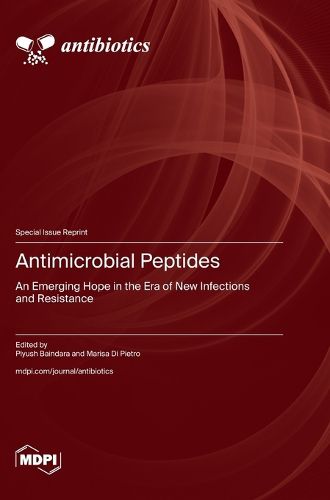
In the recent past, due to their unique properties, antimicrobial peptides (AMPs) received great attention as promising alternatives to conventional antibiotics. AMPs are naturally occurring integral components of the host defense system and are functional throughout all orders of life, ranging from prokaryotes to eukaryotes. AMPs are potent molecules with a broad spectrum of biological activities against infectious or pathogenic agents, such as bacteria, fungi, viruses, and parasites.
This Reprint covers details regarding AMPs, including the following: screening, purification, and characterization of novel AMPs; genome mining and comparative analysis of AMP-producing biosynthetic gene clusters; cloning and heterologous expression of novel AMPs; structural characterization and designing of new AMPs with potential therapeutic activities; strategies for understand the mechanisms of AMPs; standardization of AMPs' biological activities against various pathogens such as bacteria, fungi, viruses, and parasites, as well as chronic diseases like cancer and cystic fibrosis; immunomodulatory properties of AMPs and potential therapeutic applications; role of AMPs in human diseases; combination therapies of AMPs with conventional antibiotics; comparative genomics and evolutionary studies of AMPs; evolution and resistance development against AMPs; and artificial intelligence and development of novel AMPs.
$9.00 standard shipping within Australia
FREE standard shipping within Australia for orders over $100.00
Express & International shipping calculated at checkout
Stock availability can be subject to change without notice. We recommend calling the shop or contacting our online team to check availability of low stock items. Please see our Shopping Online page for more details.
This title is printed to order. This book may have been self-published. If so, we cannot guarantee the quality of the content. In the main most books will have gone through the editing process however some may not. We therefore suggest that you be aware of this before ordering this book. If in doubt check either the author or publisher’s details as we are unable to accept any returns unless they are faulty. Please contact us if you have any questions.
In the recent past, due to their unique properties, antimicrobial peptides (AMPs) received great attention as promising alternatives to conventional antibiotics. AMPs are naturally occurring integral components of the host defense system and are functional throughout all orders of life, ranging from prokaryotes to eukaryotes. AMPs are potent molecules with a broad spectrum of biological activities against infectious or pathogenic agents, such as bacteria, fungi, viruses, and parasites.
This Reprint covers details regarding AMPs, including the following: screening, purification, and characterization of novel AMPs; genome mining and comparative analysis of AMP-producing biosynthetic gene clusters; cloning and heterologous expression of novel AMPs; structural characterization and designing of new AMPs with potential therapeutic activities; strategies for understand the mechanisms of AMPs; standardization of AMPs' biological activities against various pathogens such as bacteria, fungi, viruses, and parasites, as well as chronic diseases like cancer and cystic fibrosis; immunomodulatory properties of AMPs and potential therapeutic applications; role of AMPs in human diseases; combination therapies of AMPs with conventional antibiotics; comparative genomics and evolutionary studies of AMPs; evolution and resistance development against AMPs; and artificial intelligence and development of novel AMPs.
Search our extensive online catalogue.
