Readings Newsletter
Become a Readings Member to make your shopping experience even easier.
Sign in or sign up for free!
You’re not far away from qualifying for FREE standard shipping within Australia
You’ve qualified for FREE standard shipping within Australia
The cart is loading…


This title is printed to order. This book may have been self-published. If so, we cannot guarantee the quality of the content. In the main most books will have gone through the editing process however some may not. We therefore suggest that you be aware of this before ordering this book. If in doubt check either the author or publisher’s details as we are unable to accept any returns unless they are faulty. Please contact us if you have any questions.
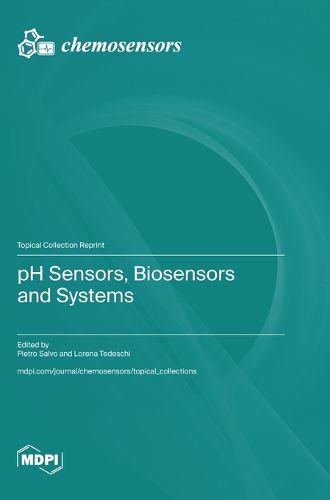
This Topical Collection Reprint has gathered the latest findings in sensors, biosensors, and technologies, with a special attention systems where the pH plays a prominent role. The pH value is crucial for many living systems and chemical reactions in nature. Biology and microbiology (e.g., monitoring of bacteria, DNA, enzymes, aminoacids, and cells), environmental protection (e.g., characterization of waste and sea water), food and beverage quality control (e.g., monitoring of fermentation processes and the characterization of fruit, drinking water, and vegetables), pharmaceutics, cosmetics (quality control of creams, gels, and shampoos), medicine (e.g., monitoring and analysis of culture media, cancer, blood, and cytoplasm), and industry (e.g., chemical baths for paints and plating) are some of the fields where pH sensors have been extensively used to understand the nature of chemical processes, as well as to monitor quality and control safety. Although paper test strips and glass electrodes are the most common pH sensors, many studies have focused on developing less fragile, miniaturized, and biocompatible sensors with higher sensitivity. The pH value can be measured through various approaches and materials, including electrochemical and optical sensors, ion-selective field effect transistors (ISFETs), quantum dots, 2D materials, and organic compounds.
$9.00 standard shipping within Australia
FREE standard shipping within Australia for orders over $100.00
Express & International shipping calculated at checkout
Stock availability can be subject to change without notice. We recommend calling the shop or contacting our online team to check availability of low stock items. Please see our Shopping Online page for more details.
This title is printed to order. This book may have been self-published. If so, we cannot guarantee the quality of the content. In the main most books will have gone through the editing process however some may not. We therefore suggest that you be aware of this before ordering this book. If in doubt check either the author or publisher’s details as we are unable to accept any returns unless they are faulty. Please contact us if you have any questions.
This Topical Collection Reprint has gathered the latest findings in sensors, biosensors, and technologies, with a special attention systems where the pH plays a prominent role. The pH value is crucial for many living systems and chemical reactions in nature. Biology and microbiology (e.g., monitoring of bacteria, DNA, enzymes, aminoacids, and cells), environmental protection (e.g., characterization of waste and sea water), food and beverage quality control (e.g., monitoring of fermentation processes and the characterization of fruit, drinking water, and vegetables), pharmaceutics, cosmetics (quality control of creams, gels, and shampoos), medicine (e.g., monitoring and analysis of culture media, cancer, blood, and cytoplasm), and industry (e.g., chemical baths for paints and plating) are some of the fields where pH sensors have been extensively used to understand the nature of chemical processes, as well as to monitor quality and control safety. Although paper test strips and glass electrodes are the most common pH sensors, many studies have focused on developing less fragile, miniaturized, and biocompatible sensors with higher sensitivity. The pH value can be measured through various approaches and materials, including electrochemical and optical sensors, ion-selective field effect transistors (ISFETs), quantum dots, 2D materials, and organic compounds.
Search our extensive online catalogue.
