Readings Newsletter
Become a Readings Member to make your shopping experience even easier.
Sign in or sign up for free!
You’re not far away from qualifying for FREE standard shipping within Australia
You’ve qualified for FREE standard shipping within Australia
The cart is loading…


This title is printed to order. This book may have been self-published. If so, we cannot guarantee the quality of the content. In the main most books will have gone through the editing process however some may not. We therefore suggest that you be aware of this before ordering this book. If in doubt check either the author or publisher’s details as we are unable to accept any returns unless they are faulty. Please contact us if you have any questions.
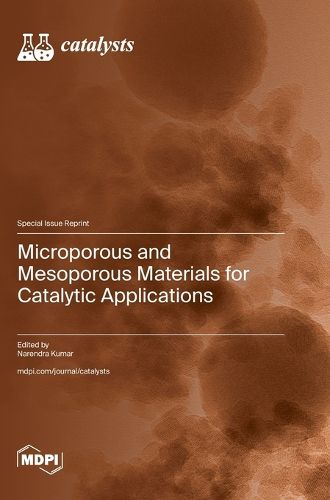
Microporous and mesoporous materials are applied in refinery processes for the production of fuel components, petro-chemicals, and fine and speciality chemicals. Furthermore, these catalytic materials are utilized in exhaust gas emission control, water purification, drug delivery, and solutions for environment-related problems. Microporous and mesoporous catalytic materials modified with transition and noble metals are synthesized via evaporation impregnation, deposition precipitation, ion exchange, chemical vapor deposition, and atomic layer deposition. Metal nanoparticle-size distributions, dispersions, metal-support interations, and acid site amounts can be designed by selecting metal modification methods. In-depth physico-chemical characterizations are carried out using nitrogen physisorption for surface area pore volume and pore size distributions, scanning electron microscopy for morphological features, transmision electron microscopy for metal nanoparticle-size distributions, X-ray powder diffraction for structural measurements, and FTIR with pyridine as the probe molecule for Broensted and Lewis acid site amounts. Microporous and mesoporous materials will be applied to the development of green process technology for the production of renewable energy, bulk chemicals, and fine chemical manufacturing.
$9.00 standard shipping within Australia
FREE standard shipping within Australia for orders over $100.00
Express & International shipping calculated at checkout
Stock availability can be subject to change without notice. We recommend calling the shop or contacting our online team to check availability of low stock items. Please see our Shopping Online page for more details.
This title is printed to order. This book may have been self-published. If so, we cannot guarantee the quality of the content. In the main most books will have gone through the editing process however some may not. We therefore suggest that you be aware of this before ordering this book. If in doubt check either the author or publisher’s details as we are unable to accept any returns unless they are faulty. Please contact us if you have any questions.
Microporous and mesoporous materials are applied in refinery processes for the production of fuel components, petro-chemicals, and fine and speciality chemicals. Furthermore, these catalytic materials are utilized in exhaust gas emission control, water purification, drug delivery, and solutions for environment-related problems. Microporous and mesoporous catalytic materials modified with transition and noble metals are synthesized via evaporation impregnation, deposition precipitation, ion exchange, chemical vapor deposition, and atomic layer deposition. Metal nanoparticle-size distributions, dispersions, metal-support interations, and acid site amounts can be designed by selecting metal modification methods. In-depth physico-chemical characterizations are carried out using nitrogen physisorption for surface area pore volume and pore size distributions, scanning electron microscopy for morphological features, transmision electron microscopy for metal nanoparticle-size distributions, X-ray powder diffraction for structural measurements, and FTIR with pyridine as the probe molecule for Broensted and Lewis acid site amounts. Microporous and mesoporous materials will be applied to the development of green process technology for the production of renewable energy, bulk chemicals, and fine chemical manufacturing.
Search our extensive online catalogue.
