Readings Newsletter
Become a Readings Member to make your shopping experience even easier.
Sign in or sign up for free!
You’re not far away from qualifying for FREE standard shipping within Australia
You’ve qualified for FREE standard shipping within Australia
The cart is loading…


This title is printed to order. This book may have been self-published. If so, we cannot guarantee the quality of the content. In the main most books will have gone through the editing process however some may not. We therefore suggest that you be aware of this before ordering this book. If in doubt check either the author or publisher’s details as we are unable to accept any returns unless they are faulty. Please contact us if you have any questions.
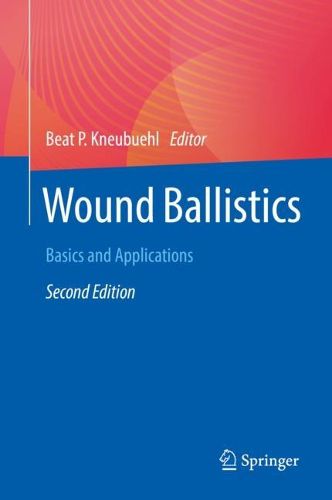
The definitive interdisciplinary reference work for wound ballistics
Basics
The book begins by providing the necessary basic knowledge about physics, ballistics and ammunition and weapons. Then it describes the behaviour of projectiles in humans and animals (the physics of gunshot injuries) and introduces the experimental simulation of gunshot wounds, including the materials suitable for this purpose.
Applications
These basic principles can be applied in forensic medicine and criminalistics. The gunshot wound provides some forensic traces and the experimental reconstruction helps to understand the dynamic crime process. The wounding potential of non-lethal weapons can be determined.
In emergency and war surgery, injuries caused by small arms bullets and fragments as well as by gas jets (of gas weapons) can be assessed.
International conventions could be freed from undefined terms (such as "unnecessary suffering") with the help of physical quantities.
Reference work
Detailed tables as e. g. ballistic data of numerous cartridge types, also older ones, material properties, as well as many otherwise difficult to access data and a trilingual glossary of ballistic and technical terms in the languages German, English and French.
NEW
Wound Ballistics of European Police ammunition
References to recent research results
Partly coloured illustrations
Due to the increase in terrorist and criminal activities worldwide, it is not only members of the armed forces who are affected. Surgeons, forensic doctors, police officers and criminalists also need to know and be able to assess the specifics of gunshot wounds.
$9.00 standard shipping within Australia
FREE standard shipping within Australia for orders over $100.00
Express & International shipping calculated at checkout
Stock availability can be subject to change without notice. We recommend calling the shop or contacting our online team to check availability of low stock items. Please see our Shopping Online page for more details.
This title is printed to order. This book may have been self-published. If so, we cannot guarantee the quality of the content. In the main most books will have gone through the editing process however some may not. We therefore suggest that you be aware of this before ordering this book. If in doubt check either the author or publisher’s details as we are unable to accept any returns unless they are faulty. Please contact us if you have any questions.
The definitive interdisciplinary reference work for wound ballistics
Basics
The book begins by providing the necessary basic knowledge about physics, ballistics and ammunition and weapons. Then it describes the behaviour of projectiles in humans and animals (the physics of gunshot injuries) and introduces the experimental simulation of gunshot wounds, including the materials suitable for this purpose.
Applications
These basic principles can be applied in forensic medicine and criminalistics. The gunshot wound provides some forensic traces and the experimental reconstruction helps to understand the dynamic crime process. The wounding potential of non-lethal weapons can be determined.
In emergency and war surgery, injuries caused by small arms bullets and fragments as well as by gas jets (of gas weapons) can be assessed.
International conventions could be freed from undefined terms (such as "unnecessary suffering") with the help of physical quantities.
Reference work
Detailed tables as e. g. ballistic data of numerous cartridge types, also older ones, material properties, as well as many otherwise difficult to access data and a trilingual glossary of ballistic and technical terms in the languages German, English and French.
NEW
Wound Ballistics of European Police ammunition
References to recent research results
Partly coloured illustrations
Due to the increase in terrorist and criminal activities worldwide, it is not only members of the armed forces who are affected. Surgeons, forensic doctors, police officers and criminalists also need to know and be able to assess the specifics of gunshot wounds.
Search our extensive online catalogue.
