Readings Newsletter
Become a Readings Member to make your shopping experience even easier.
Sign in or sign up for free!
You’re not far away from qualifying for FREE standard shipping within Australia
You’ve qualified for FREE standard shipping within Australia
The cart is loading…


This title is printed to order. This book may have been self-published. If so, we cannot guarantee the quality of the content. In the main most books will have gone through the editing process however some may not. We therefore suggest that you be aware of this before ordering this book. If in doubt check either the author or publisher’s details as we are unable to accept any returns unless they are faulty. Please contact us if you have any questions.
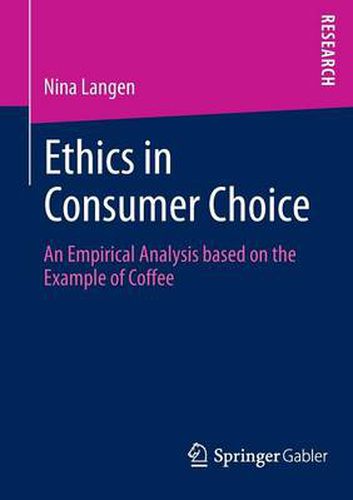
This dissertation elaborates differences and similarities of forms of ethical behaviour in general and analyses whether German consumers differentiate between different types of ethical behaviour in particular. The thesis is characterised by its intensive combination of theoretical and empirical research. It furthermore contributes to the literature as the method triangulation applied in the different surveys reveals previously unknown relationships between different kinds of ethical behaviour, such as ethical consumption and charitable giving, as well as between different forms of ethical products. Choice experiment, latent class analysis, information display matrix and item-based attitude assessment allowed the comparison of stated and revealed preferences as well as an analysis of the relevance of ethical product features within the context of different product and process attributes. The dissertation provides insights into a research field which is becoming more and more relevant and improves the understanding of consumers’ assessment and the interdependencies of the possibilities of ethical behaviour. This allows the development of recommendations for consumer policy makers, business and NGOs concerned with the ethics of consumer choice as well as future research on ethical behaviour in general and ethical consumption in particular.
$9.00 standard shipping within Australia
FREE standard shipping within Australia for orders over $100.00
Express & International shipping calculated at checkout
Stock availability can be subject to change without notice. We recommend calling the shop or contacting our online team to check availability of low stock items. Please see our Shopping Online page for more details.
This title is printed to order. This book may have been self-published. If so, we cannot guarantee the quality of the content. In the main most books will have gone through the editing process however some may not. We therefore suggest that you be aware of this before ordering this book. If in doubt check either the author or publisher’s details as we are unable to accept any returns unless they are faulty. Please contact us if you have any questions.
This dissertation elaborates differences and similarities of forms of ethical behaviour in general and analyses whether German consumers differentiate between different types of ethical behaviour in particular. The thesis is characterised by its intensive combination of theoretical and empirical research. It furthermore contributes to the literature as the method triangulation applied in the different surveys reveals previously unknown relationships between different kinds of ethical behaviour, such as ethical consumption and charitable giving, as well as between different forms of ethical products. Choice experiment, latent class analysis, information display matrix and item-based attitude assessment allowed the comparison of stated and revealed preferences as well as an analysis of the relevance of ethical product features within the context of different product and process attributes. The dissertation provides insights into a research field which is becoming more and more relevant and improves the understanding of consumers’ assessment and the interdependencies of the possibilities of ethical behaviour. This allows the development of recommendations for consumer policy makers, business and NGOs concerned with the ethics of consumer choice as well as future research on ethical behaviour in general and ethical consumption in particular.
Search our extensive online catalogue.
