Readings Newsletter
Become a Readings Member to make your shopping experience even easier.
Sign in or sign up for free!
You’re not far away from qualifying for FREE standard shipping within Australia
You’ve qualified for FREE standard shipping within Australia
The cart is loading…


This title is printed to order. This book may have been self-published. If so, we cannot guarantee the quality of the content. In the main most books will have gone through the editing process however some may not. We therefore suggest that you be aware of this before ordering this book. If in doubt check either the author or publisher’s details as we are unable to accept any returns unless they are faulty. Please contact us if you have any questions.
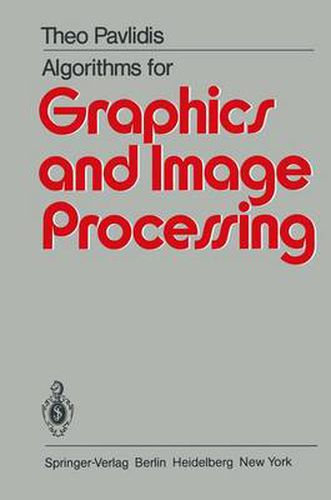
The technological developments of the last ten years have made com puter graphics and image processing by computer popular. Pictorial pat tern recognition has also shown significant progress. Clearly, there exist overlapping interests among the three areas of research. Graphic displays are of concern to anyone involved in image processing or pic torial pattern recognition and many problems in graphics require methodologies from image processing for their solutions. The data structures used in all three areas are similar. It seems that there is a common body of knowledge underlying all three areas, pictorial informa tion processing by computer. The novelty of these fields makes it difficult to design a course or to a write a book covering their basic concepts. Some of the treatises on graphics focus on the hardware and methods of current interest while treatises on image processing often emphasize applications and classical signal processing. The fast evolution of technology causes such material to lose its relevance. For example, the development of optical fibers has reduced the importance of bandwidth compression.
$9.00 standard shipping within Australia
FREE standard shipping within Australia for orders over $100.00
Express & International shipping calculated at checkout
Stock availability can be subject to change without notice. We recommend calling the shop or contacting our online team to check availability of low stock items. Please see our Shopping Online page for more details.
This title is printed to order. This book may have been self-published. If so, we cannot guarantee the quality of the content. In the main most books will have gone through the editing process however some may not. We therefore suggest that you be aware of this before ordering this book. If in doubt check either the author or publisher’s details as we are unable to accept any returns unless they are faulty. Please contact us if you have any questions.
The technological developments of the last ten years have made com puter graphics and image processing by computer popular. Pictorial pat tern recognition has also shown significant progress. Clearly, there exist overlapping interests among the three areas of research. Graphic displays are of concern to anyone involved in image processing or pic torial pattern recognition and many problems in graphics require methodologies from image processing for their solutions. The data structures used in all three areas are similar. It seems that there is a common body of knowledge underlying all three areas, pictorial informa tion processing by computer. The novelty of these fields makes it difficult to design a course or to a write a book covering their basic concepts. Some of the treatises on graphics focus on the hardware and methods of current interest while treatises on image processing often emphasize applications and classical signal processing. The fast evolution of technology causes such material to lose its relevance. For example, the development of optical fibers has reduced the importance of bandwidth compression.
Search our extensive online catalogue.
