Readings Newsletter
Become a Readings Member to make your shopping experience even easier.
Sign in or sign up for free!
You’re not far away from qualifying for FREE standard shipping within Australia
You’ve qualified for FREE standard shipping within Australia
The cart is loading…


This title is printed to order. This book may have been self-published. If so, we cannot guarantee the quality of the content. In the main most books will have gone through the editing process however some may not. We therefore suggest that you be aware of this before ordering this book. If in doubt check either the author or publisher’s details as we are unable to accept any returns unless they are faulty. Please contact us if you have any questions.
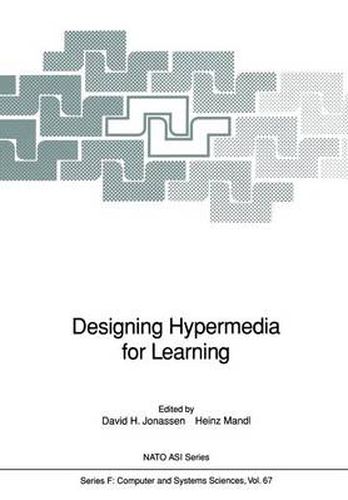
This most unusual book results from the NATO Advanced Research Work shop, Designing Hypertext/Hypermedia for Learning , held in Rottenburg am Neckar, FRO, from July 3-8, 1989. The idea for the workshop resulted from the burgeoning interest in hypertext combined with the frustrating lack of literature on leaming applications for hypertext. There was little evidence in 1988 that hypertext could successfully support learning out comes. A few projects were investigating hypertext for learning, but few conclusions were available and little if any advice on how to design hyper text for learning applications was available. Could hypertext support learning objectives? What mental processing requirements are unique to learning outcomes? How would the processing requirements of learning outcomes interact with unique user processing requirements of browsing and constructing hypertext? Should hypertext information bases be restruc tured to accommodate learning outcomes? Should the user interface be manipulated in order to support the task functionality of learning outcomes? Does the hypertext structure reflect the intellectual requirements of learning outcomes? What kinds of learning-oriented hypertext systems were being developed and what kinds of assumptions were these systems making? These and other questions demonstrated the need for this workshop. The workshop included presentations, hardware demonstrations, sharing and browsing of hypertexts, and much discussion about all of the above. These were the experiences that you, the reader of this book, unfortunately did not experience.
$9.00 standard shipping within Australia
FREE standard shipping within Australia for orders over $100.00
Express & International shipping calculated at checkout
Stock availability can be subject to change without notice. We recommend calling the shop or contacting our online team to check availability of low stock items. Please see our Shopping Online page for more details.
This title is printed to order. This book may have been self-published. If so, we cannot guarantee the quality of the content. In the main most books will have gone through the editing process however some may not. We therefore suggest that you be aware of this before ordering this book. If in doubt check either the author or publisher’s details as we are unable to accept any returns unless they are faulty. Please contact us if you have any questions.
This most unusual book results from the NATO Advanced Research Work shop, Designing Hypertext/Hypermedia for Learning , held in Rottenburg am Neckar, FRO, from July 3-8, 1989. The idea for the workshop resulted from the burgeoning interest in hypertext combined with the frustrating lack of literature on leaming applications for hypertext. There was little evidence in 1988 that hypertext could successfully support learning out comes. A few projects were investigating hypertext for learning, but few conclusions were available and little if any advice on how to design hyper text for learning applications was available. Could hypertext support learning objectives? What mental processing requirements are unique to learning outcomes? How would the processing requirements of learning outcomes interact with unique user processing requirements of browsing and constructing hypertext? Should hypertext information bases be restruc tured to accommodate learning outcomes? Should the user interface be manipulated in order to support the task functionality of learning outcomes? Does the hypertext structure reflect the intellectual requirements of learning outcomes? What kinds of learning-oriented hypertext systems were being developed and what kinds of assumptions were these systems making? These and other questions demonstrated the need for this workshop. The workshop included presentations, hardware demonstrations, sharing and browsing of hypertexts, and much discussion about all of the above. These were the experiences that you, the reader of this book, unfortunately did not experience.
Search our extensive online catalogue.
