Readings Newsletter
Become a Readings Member to make your shopping experience even easier.
Sign in or sign up for free!
You’re not far away from qualifying for FREE standard shipping within Australia
You’ve qualified for FREE standard shipping within Australia
The cart is loading…


This title is printed to order. This book may have been self-published. If so, we cannot guarantee the quality of the content. In the main most books will have gone through the editing process however some may not. We therefore suggest that you be aware of this before ordering this book. If in doubt check either the author or publisher’s details as we are unable to accept any returns unless they are faulty. Please contact us if you have any questions.
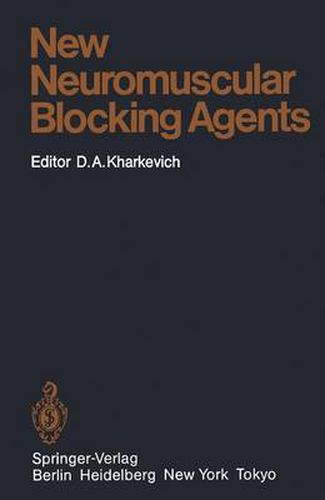
The problems associated with the pharmacologic and physiologic regulation of neuromuscular transmission and of the morphofunctional organization of neuromuscular junctions have attracted a wide range of investigators. Numerous handbooks, monographs, and reviews are devoted to this subject. At the same time, many fundamental and applied aspects of this trend continue to progress succesfully. In recent years, new experimental and clinical data on the structure and function of neuromuscular junctions have been gained, and new, more perfect neuromuscular blocking agents have been designed. It is these data that the present handbook mainly deals with. A considerable number of chapters have been written by authors from eastern Europe. This was done intentionally since much of their work has previously been published only in their own languages, and is thus inaccessible to most Western readers. This is why some of the data included in the volume are not quite the latest, but they contain fruitful ideas or important results and are of value for further progress in the pharmacology of neuromuscular transmission. Naturally, the methodological level of the investigations differs, depending on when they were carried out. The handbook contains a number of selected chapters on the pharmacology of neuromuscular junctions; they comprise data otherwise insufficiently reviewed or not dealt with at all. They furthermore reflect the up-to-date state of the problem and probable directions of further developments in this field. D. A. KHARKEVICH Contents CHAPTER 1 Neuromuscular Blocking Agents: General Considerations D. A. KHARKEVICH … … … … … .
$9.00 standard shipping within Australia
FREE standard shipping within Australia for orders over $100.00
Express & International shipping calculated at checkout
Stock availability can be subject to change without notice. We recommend calling the shop or contacting our online team to check availability of low stock items. Please see our Shopping Online page for more details.
This title is printed to order. This book may have been self-published. If so, we cannot guarantee the quality of the content. In the main most books will have gone through the editing process however some may not. We therefore suggest that you be aware of this before ordering this book. If in doubt check either the author or publisher’s details as we are unable to accept any returns unless they are faulty. Please contact us if you have any questions.
The problems associated with the pharmacologic and physiologic regulation of neuromuscular transmission and of the morphofunctional organization of neuromuscular junctions have attracted a wide range of investigators. Numerous handbooks, monographs, and reviews are devoted to this subject. At the same time, many fundamental and applied aspects of this trend continue to progress succesfully. In recent years, new experimental and clinical data on the structure and function of neuromuscular junctions have been gained, and new, more perfect neuromuscular blocking agents have been designed. It is these data that the present handbook mainly deals with. A considerable number of chapters have been written by authors from eastern Europe. This was done intentionally since much of their work has previously been published only in their own languages, and is thus inaccessible to most Western readers. This is why some of the data included in the volume are not quite the latest, but they contain fruitful ideas or important results and are of value for further progress in the pharmacology of neuromuscular transmission. Naturally, the methodological level of the investigations differs, depending on when they were carried out. The handbook contains a number of selected chapters on the pharmacology of neuromuscular junctions; they comprise data otherwise insufficiently reviewed or not dealt with at all. They furthermore reflect the up-to-date state of the problem and probable directions of further developments in this field. D. A. KHARKEVICH Contents CHAPTER 1 Neuromuscular Blocking Agents: General Considerations D. A. KHARKEVICH … … … … … .
Search our extensive online catalogue.
