Readings Newsletter
Become a Readings Member to make your shopping experience even easier.
Sign in or sign up for free!
You’re not far away from qualifying for FREE standard shipping within Australia
You’ve qualified for FREE standard shipping within Australia
The cart is loading…


This title is printed to order. This book may have been self-published. If so, we cannot guarantee the quality of the content. In the main most books will have gone through the editing process however some may not. We therefore suggest that you be aware of this before ordering this book. If in doubt check either the author or publisher’s details as we are unable to accept any returns unless they are faulty. Please contact us if you have any questions.
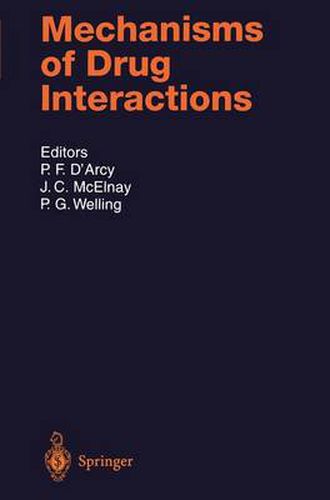
Over the years a number of excellent books have classified and detailed drug drug interactions into their respective categories, e.g. interactions at plasma protein binding sites; those altering intestinal absorption or bioavailability; those involving hepatic metabolising enzymes; those involving competition or antagonism for receptor sites, and drug interactions modifying excretory mechanisms. Such books have presented extensive tables of interactions and their management. Although of considerable value to clinicians, such publica tions have not, however, been so expressive about the individual mechanisms that underlie these interactions. It is within this sphere of mechanisms that this present volume specialises. It deals with mechanisms of in vitro and in vivo, drug-drug, drug food and drug-herbals interactions and those that cause drugs to interfere with diagnostic laboratory tests. We believe that an explanation of the mechanisms of such interactions will enable practitioners to understand more fully the nature of the interactions and thus enable them to manage better their clinical outcome. If mechanisms of interactions are better understood, then it may be pos sible for the researcher to develop meaningful animal/biochemical/tissue cul ture or physicochemical models to which new molecules could be exposed during their development stages. The present position, which largely relies on patients experiencing adverse interactions before they can be established or documented, can hardly be regarded as satisfactory. This present volume is classified into two major parts; firstly, pharmacoki netic drug interactions and, secondly, pharmacodynamic drug interactions.
$9.00 standard shipping within Australia
FREE standard shipping within Australia for orders over $100.00
Express & International shipping calculated at checkout
Stock availability can be subject to change without notice. We recommend calling the shop or contacting our online team to check availability of low stock items. Please see our Shopping Online page for more details.
This title is printed to order. This book may have been self-published. If so, we cannot guarantee the quality of the content. In the main most books will have gone through the editing process however some may not. We therefore suggest that you be aware of this before ordering this book. If in doubt check either the author or publisher’s details as we are unable to accept any returns unless they are faulty. Please contact us if you have any questions.
Over the years a number of excellent books have classified and detailed drug drug interactions into their respective categories, e.g. interactions at plasma protein binding sites; those altering intestinal absorption or bioavailability; those involving hepatic metabolising enzymes; those involving competition or antagonism for receptor sites, and drug interactions modifying excretory mechanisms. Such books have presented extensive tables of interactions and their management. Although of considerable value to clinicians, such publica tions have not, however, been so expressive about the individual mechanisms that underlie these interactions. It is within this sphere of mechanisms that this present volume specialises. It deals with mechanisms of in vitro and in vivo, drug-drug, drug food and drug-herbals interactions and those that cause drugs to interfere with diagnostic laboratory tests. We believe that an explanation of the mechanisms of such interactions will enable practitioners to understand more fully the nature of the interactions and thus enable them to manage better their clinical outcome. If mechanisms of interactions are better understood, then it may be pos sible for the researcher to develop meaningful animal/biochemical/tissue cul ture or physicochemical models to which new molecules could be exposed during their development stages. The present position, which largely relies on patients experiencing adverse interactions before they can be established or documented, can hardly be regarded as satisfactory. This present volume is classified into two major parts; firstly, pharmacoki netic drug interactions and, secondly, pharmacodynamic drug interactions.
Search our extensive online catalogue.
