Readings Newsletter
Become a Readings Member to make your shopping experience even easier.
Sign in or sign up for free!
You’re not far away from qualifying for FREE standard shipping within Australia
You’ve qualified for FREE standard shipping within Australia
The cart is loading…


This title is printed to order. This book may have been self-published. If so, we cannot guarantee the quality of the content. In the main most books will have gone through the editing process however some may not. We therefore suggest that you be aware of this before ordering this book. If in doubt check either the author or publisher’s details as we are unable to accept any returns unless they are faulty. Please contact us if you have any questions.
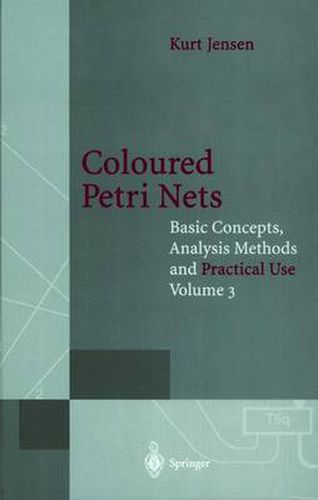
The contents of this volume are application oriented. The volume contains a de tailed presentation of 19 applications of CP-nets, covering a broad range of ap plication areas. Most of the projects have been carried out in an industrial set ting. The volume presents the most important ideas and experiences from the projects, in a way which is useful also for readers who do not yet have personal experience with the construction and analysis of large CPN models. The volume demonstrates the feasibility of using CP-nets and the CPN tools for industrial projects. The presentation of the projects is based upon material provided by the per sons who have accomplished the individual projects. At the beginning of each chapter, we list their names and we say where the original material has been published. The original material often contains more elaborate information, e.g., about details of the modelled system and related work. I have edited the material provided by the original authors. I have modified some of the CP-nets, e.g., to improve the layout and use more mnemonic names. In some cases, I have also changed a few net components, e.g., merged two tran sitions or introduced a Standard ML function for operations that are used in many arc expressions. These modifications make the CP-nets more appropriate as study material, but they do not change the essential behaviour of the CPN models.
$9.00 standard shipping within Australia
FREE standard shipping within Australia for orders over $100.00
Express & International shipping calculated at checkout
Stock availability can be subject to change without notice. We recommend calling the shop or contacting our online team to check availability of low stock items. Please see our Shopping Online page for more details.
This title is printed to order. This book may have been self-published. If so, we cannot guarantee the quality of the content. In the main most books will have gone through the editing process however some may not. We therefore suggest that you be aware of this before ordering this book. If in doubt check either the author or publisher’s details as we are unable to accept any returns unless they are faulty. Please contact us if you have any questions.
The contents of this volume are application oriented. The volume contains a de tailed presentation of 19 applications of CP-nets, covering a broad range of ap plication areas. Most of the projects have been carried out in an industrial set ting. The volume presents the most important ideas and experiences from the projects, in a way which is useful also for readers who do not yet have personal experience with the construction and analysis of large CPN models. The volume demonstrates the feasibility of using CP-nets and the CPN tools for industrial projects. The presentation of the projects is based upon material provided by the per sons who have accomplished the individual projects. At the beginning of each chapter, we list their names and we say where the original material has been published. The original material often contains more elaborate information, e.g., about details of the modelled system and related work. I have edited the material provided by the original authors. I have modified some of the CP-nets, e.g., to improve the layout and use more mnemonic names. In some cases, I have also changed a few net components, e.g., merged two tran sitions or introduced a Standard ML function for operations that are used in many arc expressions. These modifications make the CP-nets more appropriate as study material, but they do not change the essential behaviour of the CPN models.
Search our extensive online catalogue.
