Readings Newsletter
Become a Readings Member to make your shopping experience even easier.
Sign in or sign up for free!
You’re not far away from qualifying for FREE standard shipping within Australia
You’ve qualified for FREE standard shipping within Australia
The cart is loading…


This title is printed to order. This book may have been self-published. If so, we cannot guarantee the quality of the content. In the main most books will have gone through the editing process however some may not. We therefore suggest that you be aware of this before ordering this book. If in doubt check either the author or publisher’s details as we are unable to accept any returns unless they are faulty. Please contact us if you have any questions.
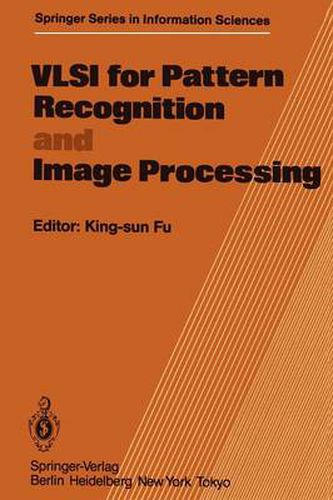
During the past two decades there has been a considerable growth in interest in problems of pattern recognition and image processing (PRIP). This inter est has created an increasing need for methods and techniques for the design of PRIP systems. PRIP involves analysis, classification and interpretation of data. Practical applications of PRIP include character recognition, re mote sensing, analysis of medical signals and images, fingerprint and face identification, target recognition and speech understanding. One difficulty in making PRIP systems practically feasible, and hence, more popularly used, is the requirement of computer time and storage. This situation is particularly serious when the patterns to be analyzed are quite complex. Thus it is of the utmost importance to investigate special comput er architectures and their implementations for PRIP. Since the advent of VLSI technology, it is possible to put thousands of components on one chip. This reduces the cost of processors and increases the processing speed. VLSI algorithms and their implementations have been recently developed for PRIP. This book is intended to document the recent major progress in VLSI system design for PRIP applications.
$9.00 standard shipping within Australia
FREE standard shipping within Australia for orders over $100.00
Express & International shipping calculated at checkout
Stock availability can be subject to change without notice. We recommend calling the shop or contacting our online team to check availability of low stock items. Please see our Shopping Online page for more details.
This title is printed to order. This book may have been self-published. If so, we cannot guarantee the quality of the content. In the main most books will have gone through the editing process however some may not. We therefore suggest that you be aware of this before ordering this book. If in doubt check either the author or publisher’s details as we are unable to accept any returns unless they are faulty. Please contact us if you have any questions.
During the past two decades there has been a considerable growth in interest in problems of pattern recognition and image processing (PRIP). This inter est has created an increasing need for methods and techniques for the design of PRIP systems. PRIP involves analysis, classification and interpretation of data. Practical applications of PRIP include character recognition, re mote sensing, analysis of medical signals and images, fingerprint and face identification, target recognition and speech understanding. One difficulty in making PRIP systems practically feasible, and hence, more popularly used, is the requirement of computer time and storage. This situation is particularly serious when the patterns to be analyzed are quite complex. Thus it is of the utmost importance to investigate special comput er architectures and their implementations for PRIP. Since the advent of VLSI technology, it is possible to put thousands of components on one chip. This reduces the cost of processors and increases the processing speed. VLSI algorithms and their implementations have been recently developed for PRIP. This book is intended to document the recent major progress in VLSI system design for PRIP applications.
Search our extensive online catalogue.
