Readings Newsletter
Become a Readings Member to make your shopping experience even easier.
Sign in or sign up for free!
You’re not far away from qualifying for FREE standard shipping within Australia
You’ve qualified for FREE standard shipping within Australia
The cart is loading…


This title is printed to order. This book may have been self-published. If so, we cannot guarantee the quality of the content. In the main most books will have gone through the editing process however some may not. We therefore suggest that you be aware of this before ordering this book. If in doubt check either the author or publisher’s details as we are unable to accept any returns unless they are faulty. Please contact us if you have any questions.
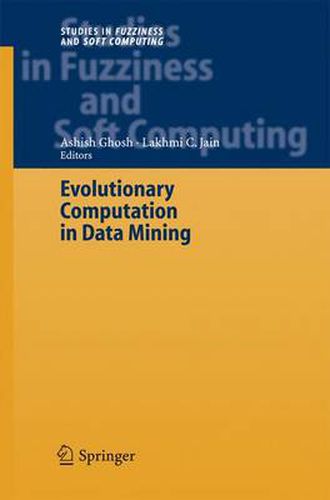
Data mining (DM) consists of extracting interesting knowledge from re- world, large & complex data sets; and is the core step of a broader process, called the knowledge discovery from databases (KDD) process. In addition to the DM step, which actually extracts knowledge from data, the KDD process includes several preprocessing (or data preparation) and post-processing (or knowledge refinement) steps. The goal of data preprocessing methods is to transform the data to facilitate the application of a (or several) given DM algorithm(s), whereas the goal of knowledge refinement methods is to validate and refine discovered knowledge. Ideally, discovered knowledge should be not only accurate, but also comprehensible and interesting to the user. The total process is highly computation intensive. The idea of automatically discovering knowledge from databases is a very attractive and challenging task, both for academia and for industry. Hence, there has been a growing interest in data mining in several AI-related areas, including evolutionary algorithms (EAs). The main motivation for applying EAs to KDD tasks is that they are robust and adaptive search methods, which perform a global search in the space of candidate solutions (for instance, rules or another form of knowledge representation).
$9.00 standard shipping within Australia
FREE standard shipping within Australia for orders over $100.00
Express & International shipping calculated at checkout
Stock availability can be subject to change without notice. We recommend calling the shop or contacting our online team to check availability of low stock items. Please see our Shopping Online page for more details.
This title is printed to order. This book may have been self-published. If so, we cannot guarantee the quality of the content. In the main most books will have gone through the editing process however some may not. We therefore suggest that you be aware of this before ordering this book. If in doubt check either the author or publisher’s details as we are unable to accept any returns unless they are faulty. Please contact us if you have any questions.
Data mining (DM) consists of extracting interesting knowledge from re- world, large & complex data sets; and is the core step of a broader process, called the knowledge discovery from databases (KDD) process. In addition to the DM step, which actually extracts knowledge from data, the KDD process includes several preprocessing (or data preparation) and post-processing (or knowledge refinement) steps. The goal of data preprocessing methods is to transform the data to facilitate the application of a (or several) given DM algorithm(s), whereas the goal of knowledge refinement methods is to validate and refine discovered knowledge. Ideally, discovered knowledge should be not only accurate, but also comprehensible and interesting to the user. The total process is highly computation intensive. The idea of automatically discovering knowledge from databases is a very attractive and challenging task, both for academia and for industry. Hence, there has been a growing interest in data mining in several AI-related areas, including evolutionary algorithms (EAs). The main motivation for applying EAs to KDD tasks is that they are robust and adaptive search methods, which perform a global search in the space of candidate solutions (for instance, rules or another form of knowledge representation).
Search our extensive online catalogue.
