Readings Newsletter
Become a Readings Member to make your shopping experience even easier.
Sign in or sign up for free!
You’re not far away from qualifying for FREE standard shipping within Australia
You’ve qualified for FREE standard shipping within Australia
The cart is loading…


This title is printed to order. This book may have been self-published. If so, we cannot guarantee the quality of the content. In the main most books will have gone through the editing process however some may not. We therefore suggest that you be aware of this before ordering this book. If in doubt check either the author or publisher’s details as we are unable to accept any returns unless they are faulty. Please contact us if you have any questions.
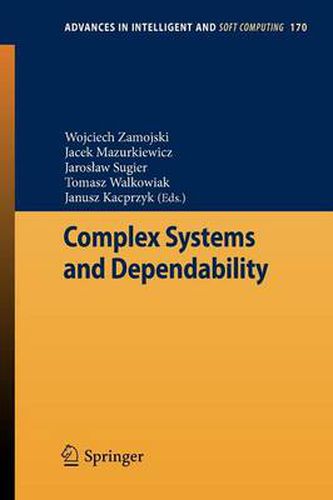
Typical contemporary complex system is a multifaceted amalgamation of technical, information, organization, software and human (users, administrators and management) resources. Complexity of such a system comes not only from its involved technical and organizational structure but mainly from complexity of information processes that must be implemented in the operational environment (data processing, monitoring, management, etc.). In such case traditional methods of reliability analysis focused mainly on technical level are usually insufficient in performance evaluation and more innovative methods of dependability analysis must be applied which are based on multidisciplinary approach to theory, technology and maintenance of systems operating in real (and very often unfriendly) environments. This monograph presents selected new developments in such areas of dependability research as system modelling, tools and methodologies for system analysis, data security, secure system design and specific dependability aspects in specialized technical applications. Many practical cases illustrate the universal rule that complexity and multiplicity of system processes, their concurrency and their reliance on embedded intelligence (human and artificial) significantly impedes construction of strict mathematical models and calls for application of intelligent and soft computing methods.
$9.00 standard shipping within Australia
FREE standard shipping within Australia for orders over $100.00
Express & International shipping calculated at checkout
Stock availability can be subject to change without notice. We recommend calling the shop or contacting our online team to check availability of low stock items. Please see our Shopping Online page for more details.
This title is printed to order. This book may have been self-published. If so, we cannot guarantee the quality of the content. In the main most books will have gone through the editing process however some may not. We therefore suggest that you be aware of this before ordering this book. If in doubt check either the author or publisher’s details as we are unable to accept any returns unless they are faulty. Please contact us if you have any questions.
Typical contemporary complex system is a multifaceted amalgamation of technical, information, organization, software and human (users, administrators and management) resources. Complexity of such a system comes not only from its involved technical and organizational structure but mainly from complexity of information processes that must be implemented in the operational environment (data processing, monitoring, management, etc.). In such case traditional methods of reliability analysis focused mainly on technical level are usually insufficient in performance evaluation and more innovative methods of dependability analysis must be applied which are based on multidisciplinary approach to theory, technology and maintenance of systems operating in real (and very often unfriendly) environments. This monograph presents selected new developments in such areas of dependability research as system modelling, tools and methodologies for system analysis, data security, secure system design and specific dependability aspects in specialized technical applications. Many practical cases illustrate the universal rule that complexity and multiplicity of system processes, their concurrency and their reliance on embedded intelligence (human and artificial) significantly impedes construction of strict mathematical models and calls for application of intelligent and soft computing methods.
Search our extensive online catalogue.
