Readings Newsletter
Become a Readings Member to make your shopping experience even easier.
Sign in or sign up for free!
You’re not far away from qualifying for FREE standard shipping within Australia
You’ve qualified for FREE standard shipping within Australia
The cart is loading…


This title is printed to order. This book may have been self-published. If so, we cannot guarantee the quality of the content. In the main most books will have gone through the editing process however some may not. We therefore suggest that you be aware of this before ordering this book. If in doubt check either the author or publisher’s details as we are unable to accept any returns unless they are faulty. Please contact us if you have any questions.
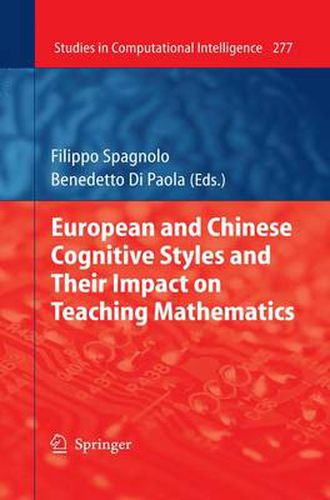
The book provides strong evidence that research on the cognitive processes from arithmetic thought to algebraic thought should take into consideration the socio-cultural context. It is an important contribution to the literature on linguistic structure in comparative studies related to Chinese student mathematics learning.
This book not only makes a great contribution to research in mathematics education, the findings of this study also addressed insightful approaches and thoughts of understanding the development of algebraic thinking in cultural contexts for classroom teachers. Using written Chinese language from different theoretical references provided wonderful approaches for understanding student algebra cognitive development in a different way and calls educators for to pay special attention to an epistemological and linguistic view of algebraic development. The findings inform classroom teachers that the cultural context plays an important role in student learning mathematics. A typical analysis of the cognitive dimension involved in some in the historical and cultural contexts is a great resource for classroom teachers.
I really enjoyed reading this book and learned a lot from its compelling analysis.
Shuhua An, Associate Professor and Director of Graduate Program in Mathematics Education, California State University, Long Beach
$9.00 standard shipping within Australia
FREE standard shipping within Australia for orders over $100.00
Express & International shipping calculated at checkout
Stock availability can be subject to change without notice. We recommend calling the shop or contacting our online team to check availability of low stock items. Please see our Shopping Online page for more details.
This title is printed to order. This book may have been self-published. If so, we cannot guarantee the quality of the content. In the main most books will have gone through the editing process however some may not. We therefore suggest that you be aware of this before ordering this book. If in doubt check either the author or publisher’s details as we are unable to accept any returns unless they are faulty. Please contact us if you have any questions.
The book provides strong evidence that research on the cognitive processes from arithmetic thought to algebraic thought should take into consideration the socio-cultural context. It is an important contribution to the literature on linguistic structure in comparative studies related to Chinese student mathematics learning.
This book not only makes a great contribution to research in mathematics education, the findings of this study also addressed insightful approaches and thoughts of understanding the development of algebraic thinking in cultural contexts for classroom teachers. Using written Chinese language from different theoretical references provided wonderful approaches for understanding student algebra cognitive development in a different way and calls educators for to pay special attention to an epistemological and linguistic view of algebraic development. The findings inform classroom teachers that the cultural context plays an important role in student learning mathematics. A typical analysis of the cognitive dimension involved in some in the historical and cultural contexts is a great resource for classroom teachers.
I really enjoyed reading this book and learned a lot from its compelling analysis.
Shuhua An, Associate Professor and Director of Graduate Program in Mathematics Education, California State University, Long Beach
Search our extensive online catalogue.
