Readings Newsletter
Become a Readings Member to make your shopping experience even easier.
Sign in or sign up for free!
You’re not far away from qualifying for FREE standard shipping within Australia
You’ve qualified for FREE standard shipping within Australia
The cart is loading…


This title is printed to order. This book may have been self-published. If so, we cannot guarantee the quality of the content. In the main most books will have gone through the editing process however some may not. We therefore suggest that you be aware of this before ordering this book. If in doubt check either the author or publisher’s details as we are unable to accept any returns unless they are faulty. Please contact us if you have any questions.
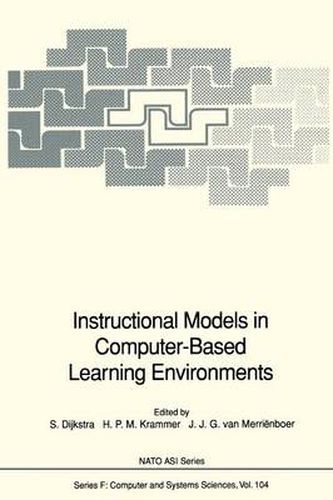
In the last decade there have been rapid developments in the field of
computer-based learning environments. A whole new generation of
computer-based learning environments has appeared, requiring new approaches to design and development. One main feature of current systems is
that they distinguish different knowledge bases that are assumed to be necessary to support learning processes. Current computer-based learning
environments often require explicit representations of large bodies of
knowledge, including knowledge of instruction. This book focuses on
instructional models as explicit, potentially implementable representations of knowledge concerning one or more aspects of instruction. The book
has three parts, relating to different aspects of the knowledge that
should be made explicit in instructional models: knowledge of instructional planning, knowledge of instructional strategies, and knowledge of
instructional control. The book is based on a NATO Advanced
Research Workshop held at the University of Twente, The Netherlands in July 1991.
$9.00 standard shipping within Australia
FREE standard shipping within Australia for orders over $100.00
Express & International shipping calculated at checkout
Stock availability can be subject to change without notice. We recommend calling the shop or contacting our online team to check availability of low stock items. Please see our Shopping Online page for more details.
This title is printed to order. This book may have been self-published. If so, we cannot guarantee the quality of the content. In the main most books will have gone through the editing process however some may not. We therefore suggest that you be aware of this before ordering this book. If in doubt check either the author or publisher’s details as we are unable to accept any returns unless they are faulty. Please contact us if you have any questions.
In the last decade there have been rapid developments in the field of
computer-based learning environments. A whole new generation of
computer-based learning environments has appeared, requiring new approaches to design and development. One main feature of current systems is
that they distinguish different knowledge bases that are assumed to be necessary to support learning processes. Current computer-based learning
environments often require explicit representations of large bodies of
knowledge, including knowledge of instruction. This book focuses on
instructional models as explicit, potentially implementable representations of knowledge concerning one or more aspects of instruction. The book
has three parts, relating to different aspects of the knowledge that
should be made explicit in instructional models: knowledge of instructional planning, knowledge of instructional strategies, and knowledge of
instructional control. The book is based on a NATO Advanced
Research Workshop held at the University of Twente, The Netherlands in July 1991.
Search our extensive online catalogue.
