Readings Newsletter
Become a Readings Member to make your shopping experience even easier.
Sign in or sign up for free!
You’re not far away from qualifying for FREE standard shipping within Australia
You’ve qualified for FREE standard shipping within Australia
The cart is loading…


This title is printed to order. This book may have been self-published. If so, we cannot guarantee the quality of the content. In the main most books will have gone through the editing process however some may not. We therefore suggest that you be aware of this before ordering this book. If in doubt check either the author or publisher’s details as we are unable to accept any returns unless they are faulty. Please contact us if you have any questions.
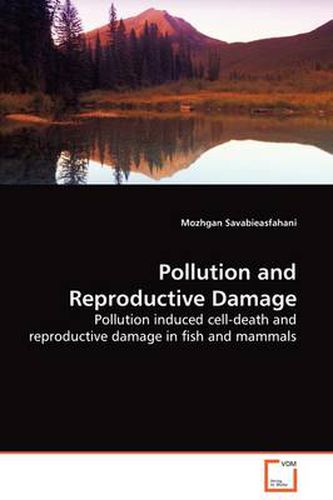
Hormonally active compounds (pesticides, herbicides, bacterial agents, and synthetic hormones) continue to be released into the environment. These compounds are widely spread, highly persistent, bioavailable, and most importantly present at physiologically relevant concentrations. Many aquatic and terrestrial populations have exhibited signs of distress or have been severely impacted because of exposure to such pollutants. Apoptosis is a well-conserved hormonally controlled physiological pathway that is highly sensitive to exposure to pollutants and xenobiotics. Endocrine active compounds can cause disturbances in hormonal control of apoptosis and alter development or maintenance of reproductive tissue in growing or reproductively mature individual. These changes can cause reduced reproductive capacity in the exposed individual. Here we offer first evidence that petrochemical contaminants induce apoptosis in highly proliferating reproductive, hematopoietic, and immune (thymus, bone marrow, and spleen) tissue of small mammals living on contaminated sites; we also show that aquatic pollution effects on reproductive fitness can be monitored using in vitro cultures of fish eggs.
$9.00 standard shipping within Australia
FREE standard shipping within Australia for orders over $100.00
Express & International shipping calculated at checkout
Stock availability can be subject to change without notice. We recommend calling the shop or contacting our online team to check availability of low stock items. Please see our Shopping Online page for more details.
This title is printed to order. This book may have been self-published. If so, we cannot guarantee the quality of the content. In the main most books will have gone through the editing process however some may not. We therefore suggest that you be aware of this before ordering this book. If in doubt check either the author or publisher’s details as we are unable to accept any returns unless they are faulty. Please contact us if you have any questions.
Hormonally active compounds (pesticides, herbicides, bacterial agents, and synthetic hormones) continue to be released into the environment. These compounds are widely spread, highly persistent, bioavailable, and most importantly present at physiologically relevant concentrations. Many aquatic and terrestrial populations have exhibited signs of distress or have been severely impacted because of exposure to such pollutants. Apoptosis is a well-conserved hormonally controlled physiological pathway that is highly sensitive to exposure to pollutants and xenobiotics. Endocrine active compounds can cause disturbances in hormonal control of apoptosis and alter development or maintenance of reproductive tissue in growing or reproductively mature individual. These changes can cause reduced reproductive capacity in the exposed individual. Here we offer first evidence that petrochemical contaminants induce apoptosis in highly proliferating reproductive, hematopoietic, and immune (thymus, bone marrow, and spleen) tissue of small mammals living on contaminated sites; we also show that aquatic pollution effects on reproductive fitness can be monitored using in vitro cultures of fish eggs.
Search our extensive online catalogue.
