Readings Newsletter
Become a Readings Member to make your shopping experience even easier.
Sign in or sign up for free!
You’re not far away from qualifying for FREE standard shipping within Australia
You’ve qualified for FREE standard shipping within Australia
The cart is loading…


This title is printed to order. This book may have been self-published. If so, we cannot guarantee the quality of the content. In the main most books will have gone through the editing process however some may not. We therefore suggest that you be aware of this before ordering this book. If in doubt check either the author or publisher’s details as we are unable to accept any returns unless they are faulty. Please contact us if you have any questions.
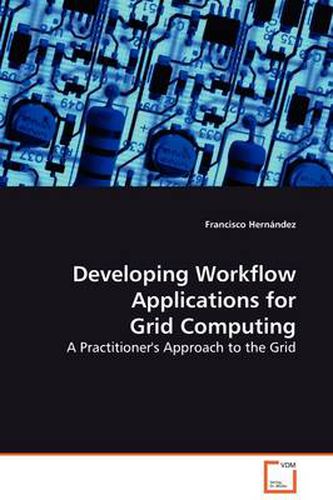
Grid computing enables the sharing of heterogeneous resources among different administrative domains promising unlimited computational and storage power available on demand. However, Grid applications are often developed in an ad-hoc manner with little or no transferability across them. Grid applications not only need to adapt to evolving standards but they also need to adjust to a dynamic environment in which resources can be added and removed on demand. This book presents an approach that simplifies the development of Grid applications and empowers end-users to take full advantage of Grid infrastructure. The approach uses domain specific modeling, a modern software engineering method for automating the development of software, to develop a workflow tool that can be used by end-users to create complex Grid applications graphically. This book provides an introduction to Grid computing and workflow systems as well as a practical exercise in domain specific modeling. As such, this book should be of great use for software engineers and anyone else interested in reaping the benefits of Grid computing and scientific workflows.
$9.00 standard shipping within Australia
FREE standard shipping within Australia for orders over $100.00
Express & International shipping calculated at checkout
Stock availability can be subject to change without notice. We recommend calling the shop or contacting our online team to check availability of low stock items. Please see our Shopping Online page for more details.
This title is printed to order. This book may have been self-published. If so, we cannot guarantee the quality of the content. In the main most books will have gone through the editing process however some may not. We therefore suggest that you be aware of this before ordering this book. If in doubt check either the author or publisher’s details as we are unable to accept any returns unless they are faulty. Please contact us if you have any questions.
Grid computing enables the sharing of heterogeneous resources among different administrative domains promising unlimited computational and storage power available on demand. However, Grid applications are often developed in an ad-hoc manner with little or no transferability across them. Grid applications not only need to adapt to evolving standards but they also need to adjust to a dynamic environment in which resources can be added and removed on demand. This book presents an approach that simplifies the development of Grid applications and empowers end-users to take full advantage of Grid infrastructure. The approach uses domain specific modeling, a modern software engineering method for automating the development of software, to develop a workflow tool that can be used by end-users to create complex Grid applications graphically. This book provides an introduction to Grid computing and workflow systems as well as a practical exercise in domain specific modeling. As such, this book should be of great use for software engineers and anyone else interested in reaping the benefits of Grid computing and scientific workflows.
Search our extensive online catalogue.
