Readings Newsletter
Become a Readings Member to make your shopping experience even easier.
Sign in or sign up for free!
You’re not far away from qualifying for FREE standard shipping within Australia
You’ve qualified for FREE standard shipping within Australia
The cart is loading…


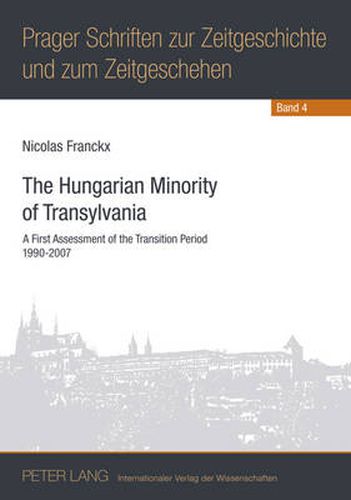
The Hungarian Minority of Transylvania gives an overview of the Hungarian minority’s situation between the end of Communism and Romania’s entry into the EU. In the historical foreword, the author sets the scenes while re-creating the dialectic relation between both nations. The author also provides a theoretical background on minority rights, with the goal to define to which minority sub-category belongs the Hungarian minority of Romania. The third section of the study reviews the minority rights legislation in force in Romania in 1990-2007 (international texts, bilateral treaties, Romanian legislation). The last chapter presents an overview of the situation in the field, using reports by international human rights organisations, local NGOs and civil rights activists.
$9.00 standard shipping within Australia
FREE standard shipping within Australia for orders over $100.00
Express & International shipping calculated at checkout
Stock availability can be subject to change without notice. We recommend calling the shop or contacting our online team to check availability of low stock items. Please see our Shopping Online page for more details.
The Hungarian Minority of Transylvania gives an overview of the Hungarian minority’s situation between the end of Communism and Romania’s entry into the EU. In the historical foreword, the author sets the scenes while re-creating the dialectic relation between both nations. The author also provides a theoretical background on minority rights, with the goal to define to which minority sub-category belongs the Hungarian minority of Romania. The third section of the study reviews the minority rights legislation in force in Romania in 1990-2007 (international texts, bilateral treaties, Romanian legislation). The last chapter presents an overview of the situation in the field, using reports by international human rights organisations, local NGOs and civil rights activists.
Search our extensive online catalogue.
