Readings Newsletter
Become a Readings Member to make your shopping experience even easier.
Sign in or sign up for free!
You’re not far away from qualifying for FREE standard shipping within Australia
You’ve qualified for FREE standard shipping within Australia
The cart is loading…


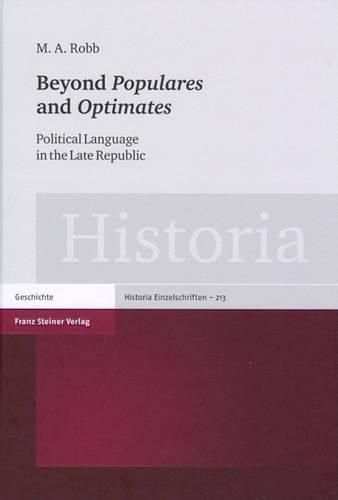
Modern interpretations of the late Roman Republic have been dominated by the twin concepts of ‘populares’ and ‘optimates’, commonly assumed to refer to two antithetical political categories. However, the definition of these groups is much debated: some historians see them as ideological movements or traditions, others as differences of political style and method. This book asks whether this debate may in fact be chasing a mirage. Through a detailed analysis of the usage of the two terms in Cicero and his close contemporaries, it is argued that they carried no clear political meaning. What emerges instead is a political language focused on the elite’s fundamental concerns about internal divisions and the maintenance of aristocratic consensus.
$9.00 standard shipping within Australia
FREE standard shipping within Australia for orders over $100.00
Express & International shipping calculated at checkout
Stock availability can be subject to change without notice. We recommend calling the shop or contacting our online team to check availability of low stock items. Please see our Shopping Online page for more details.
Modern interpretations of the late Roman Republic have been dominated by the twin concepts of ‘populares’ and ‘optimates’, commonly assumed to refer to two antithetical political categories. However, the definition of these groups is much debated: some historians see them as ideological movements or traditions, others as differences of political style and method. This book asks whether this debate may in fact be chasing a mirage. Through a detailed analysis of the usage of the two terms in Cicero and his close contemporaries, it is argued that they carried no clear political meaning. What emerges instead is a political language focused on the elite’s fundamental concerns about internal divisions and the maintenance of aristocratic consensus.
Search our extensive online catalogue.
