Readings Newsletter
Become a Readings Member to make your shopping experience even easier.
Sign in or sign up for free!
You’re not far away from qualifying for FREE standard shipping within Australia
You’ve qualified for FREE standard shipping within Australia
The cart is loading…


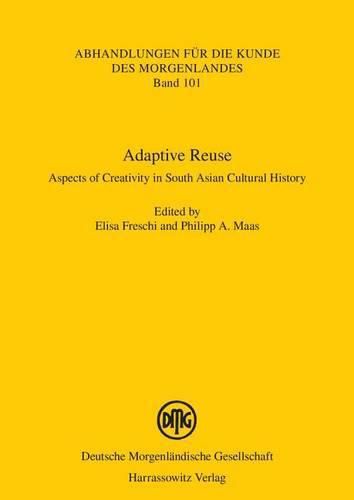
The theoretical framework of Adaptive reuse (a term originally developed in the field of architecture) is here applied to a wide spectrum of cultural activities, from the composition of new texts on the basis of earlier ones to the re-creation of concepts and rituals. The first section of this volume consists of five case studies dealing with the adaptive reuse of Sanskrit philosophical and grammatical texts in Sanskrit works of philosophy, grammar and poetry. In these cases, adaptive reuse allows the creation of new forms and contents within a traditionally established framework in which the prestige of the sources of adaptive reuse reflects upon its target. In the second section, entitled Adaptive Reuse of Tropes, the motif of the chariot in Vedic, medieval and contemporary works and rituals is analyzed and fruitfully employed in various religious contexts. The chapters of the third section deal again with philosophical and religious texts, this time focusing on the adaptive reuse of sources that are no longer available or never existed. It emerges that the reuse of virtual texts was frequently intended to support the introduction of innovations into established traditions. In some cases, the prestige of the reusing works even reflected back on the allegedly reused source. Finally, the section Reuse from the Perspective of the Digital Humanities deals with the computer-based identification of possibly reused text-passages in epic literature that otherwise would remain undetectable.
$9.00 standard shipping within Australia
FREE standard shipping within Australia for orders over $100.00
Express & International shipping calculated at checkout
Stock availability can be subject to change without notice. We recommend calling the shop or contacting our online team to check availability of low stock items. Please see our Shopping Online page for more details.
The theoretical framework of Adaptive reuse (a term originally developed in the field of architecture) is here applied to a wide spectrum of cultural activities, from the composition of new texts on the basis of earlier ones to the re-creation of concepts and rituals. The first section of this volume consists of five case studies dealing with the adaptive reuse of Sanskrit philosophical and grammatical texts in Sanskrit works of philosophy, grammar and poetry. In these cases, adaptive reuse allows the creation of new forms and contents within a traditionally established framework in which the prestige of the sources of adaptive reuse reflects upon its target. In the second section, entitled Adaptive Reuse of Tropes, the motif of the chariot in Vedic, medieval and contemporary works and rituals is analyzed and fruitfully employed in various religious contexts. The chapters of the third section deal again with philosophical and religious texts, this time focusing on the adaptive reuse of sources that are no longer available or never existed. It emerges that the reuse of virtual texts was frequently intended to support the introduction of innovations into established traditions. In some cases, the prestige of the reusing works even reflected back on the allegedly reused source. Finally, the section Reuse from the Perspective of the Digital Humanities deals with the computer-based identification of possibly reused text-passages in epic literature that otherwise would remain undetectable.
Search our extensive online catalogue.
