Readings Newsletter
Become a Readings Member to make your shopping experience even easier.
Sign in or sign up for free!
You’re not far away from qualifying for FREE standard shipping within Australia
You’ve qualified for FREE standard shipping within Australia
The cart is loading…


This title is printed to order. This book may have been self-published. If so, we cannot guarantee the quality of the content. In the main most books will have gone through the editing process however some may not. We therefore suggest that you be aware of this before ordering this book. If in doubt check either the author or publisher’s details as we are unable to accept any returns unless they are faulty. Please contact us if you have any questions.
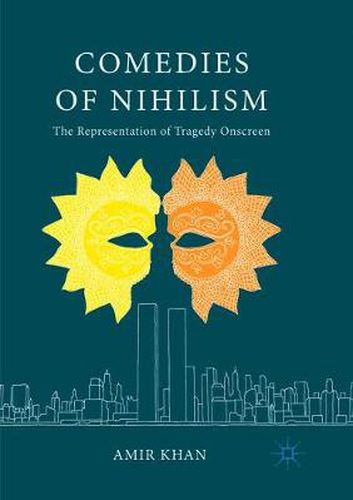
This book presents close-readings of seven post-millennial comedic films: Up in the Air, Tropic Thunder, JCVD, Winnebago Man, The Trotsky, Be Kind Rewind, and Hamlet 2. It is a sequel to Stanley Cavell’s 1981 landmark study of the comedic genre, Pursuits of Happiness, where he examines seven comedies of Hollywood’s Golden Age. Khan puts forward the idea that comedies, once centred on the conventional happy ending, are no longer interested in detailing the steps to any ending we might call happy. Instead, the agenda of most culturally serious comedies today is to spoof, to make all that is fair foul. The seven films presented here risk a type of cultural nihilism-spoofing for the sake of spoofing and nothing else, indicative not of film’s promise but its failure.
By equating the failure of film with the failed national politics of Canada (or the failed politics of nationalism and community more generally), this study shows that comedy has less to do with happiness and more to do with the grotesque. The films analysed represent hyper-realized forms of comic irony and move towards what theatre knows as tragedy, or a tragic vision.
$9.00 standard shipping within Australia
FREE standard shipping within Australia for orders over $100.00
Express & International shipping calculated at checkout
Stock availability can be subject to change without notice. We recommend calling the shop or contacting our online team to check availability of low stock items. Please see our Shopping Online page for more details.
This title is printed to order. This book may have been self-published. If so, we cannot guarantee the quality of the content. In the main most books will have gone through the editing process however some may not. We therefore suggest that you be aware of this before ordering this book. If in doubt check either the author or publisher’s details as we are unable to accept any returns unless they are faulty. Please contact us if you have any questions.
This book presents close-readings of seven post-millennial comedic films: Up in the Air, Tropic Thunder, JCVD, Winnebago Man, The Trotsky, Be Kind Rewind, and Hamlet 2. It is a sequel to Stanley Cavell’s 1981 landmark study of the comedic genre, Pursuits of Happiness, where he examines seven comedies of Hollywood’s Golden Age. Khan puts forward the idea that comedies, once centred on the conventional happy ending, are no longer interested in detailing the steps to any ending we might call happy. Instead, the agenda of most culturally serious comedies today is to spoof, to make all that is fair foul. The seven films presented here risk a type of cultural nihilism-spoofing for the sake of spoofing and nothing else, indicative not of film’s promise but its failure.
By equating the failure of film with the failed national politics of Canada (or the failed politics of nationalism and community more generally), this study shows that comedy has less to do with happiness and more to do with the grotesque. The films analysed represent hyper-realized forms of comic irony and move towards what theatre knows as tragedy, or a tragic vision.
Search our extensive online catalogue.
