Readings Newsletter
Become a Readings Member to make your shopping experience even easier.
Sign in or sign up for free!
You’re not far away from qualifying for FREE standard shipping within Australia
You’ve qualified for FREE standard shipping within Australia
The cart is loading…


This title is printed to order. This book may have been self-published. If so, we cannot guarantee the quality of the content. In the main most books will have gone through the editing process however some may not. We therefore suggest that you be aware of this before ordering this book. If in doubt check either the author or publisher’s details as we are unable to accept any returns unless they are faulty. Please contact us if you have any questions.
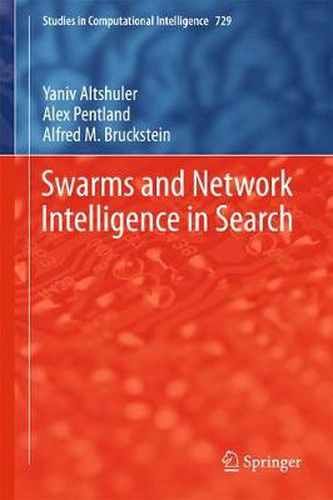
This book offers a comprehensive analysis of the theory and tools needed for the development of an efficient and robust infrastructure for the design of collaborative patrolling unmanned aerial vehicle (UAV) swarms, focusing on its applications for tactical intelligence drones. It discusses frameworks for robustly and near-optimally analyzing flocks of semi-autonomous vehicles designed to efficiently perform the ongoing dynamic patrolling and scanning of pre-defined search regions . It discusses the theoretical limitations of such systems, as well as the trade-offs between the systems’ various economic and operational parameters. Current UAV systems rely mainly on human operators for the design and adaptation of drones’ flying routes. However, recent technological advances have introduced new systems, comprised of a small number of self-organizing vehicles, manually guided at the swarm level by a human operator. With the growing complexity of such man-supervised architectures, it is becoming increasingly harder to guarantee a pre-defined level of performance. The use of large scale swarms of UAVs as a combat and reconnaissance platform therefore necessitates the development of an efficient optimization mechanism of their utilization, specifically in the design and maintenance of their patrolling routes. The book is intended for researchers and engineers in the fields of swarms systems and autonomous drones.
$9.00 standard shipping within Australia
FREE standard shipping within Australia for orders over $100.00
Express & International shipping calculated at checkout
Stock availability can be subject to change without notice. We recommend calling the shop or contacting our online team to check availability of low stock items. Please see our Shopping Online page for more details.
This title is printed to order. This book may have been self-published. If so, we cannot guarantee the quality of the content. In the main most books will have gone through the editing process however some may not. We therefore suggest that you be aware of this before ordering this book. If in doubt check either the author or publisher’s details as we are unable to accept any returns unless they are faulty. Please contact us if you have any questions.
This book offers a comprehensive analysis of the theory and tools needed for the development of an efficient and robust infrastructure for the design of collaborative patrolling unmanned aerial vehicle (UAV) swarms, focusing on its applications for tactical intelligence drones. It discusses frameworks for robustly and near-optimally analyzing flocks of semi-autonomous vehicles designed to efficiently perform the ongoing dynamic patrolling and scanning of pre-defined search regions . It discusses the theoretical limitations of such systems, as well as the trade-offs between the systems’ various economic and operational parameters. Current UAV systems rely mainly on human operators for the design and adaptation of drones’ flying routes. However, recent technological advances have introduced new systems, comprised of a small number of self-organizing vehicles, manually guided at the swarm level by a human operator. With the growing complexity of such man-supervised architectures, it is becoming increasingly harder to guarantee a pre-defined level of performance. The use of large scale swarms of UAVs as a combat and reconnaissance platform therefore necessitates the development of an efficient optimization mechanism of their utilization, specifically in the design and maintenance of their patrolling routes. The book is intended for researchers and engineers in the fields of swarms systems and autonomous drones.
Search our extensive online catalogue.
