Readings Newsletter
Become a Readings Member to make your shopping experience even easier.
Sign in or sign up for free!
You’re not far away from qualifying for FREE standard shipping within Australia
You’ve qualified for FREE standard shipping within Australia
The cart is loading…


This title is printed to order. This book may have been self-published. If so, we cannot guarantee the quality of the content. In the main most books will have gone through the editing process however some may not. We therefore suggest that you be aware of this before ordering this book. If in doubt check either the author or publisher’s details as we are unable to accept any returns unless they are faulty. Please contact us if you have any questions.
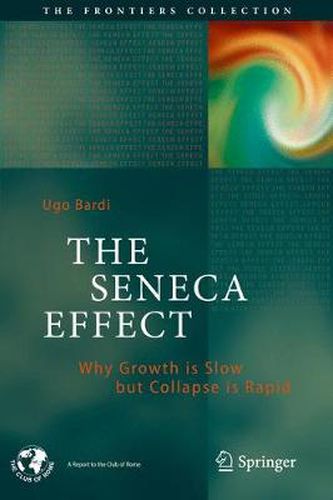
The essence of this book can be found in a line written by the ancient Roman Stoic Philosopher Lucius Annaeus Seneca: Fortune is of sluggish growth, but ruin is rapid . This sentence summarizes the features of the phenomenon that we call collapse, which is typically sudden and often unexpected, like the proverbial house of cards. But why are such collapses so common, and what generates them? Several books have been published on the subject, including the well known Collapse by Jared Diamond (2005), The collapse of complex societies by Joseph Tainter (1998) and The Tipping Point, by Malcom Gladwell (2000). Why The Seneca Effect? This book is an ambitious attempt to pull these various strands together by describing collapse from a multi-disciplinary viewpoint. The reader will discover how collapse is a collective phenomenon that occurs in what we call today complex systems, with a special emphasis on system dynamics and the concept of feedback. From this foundation, Bardi applies the theory to real-world systems, from the mechanics of fracture and the collapse of large structures to financial collapses, famines and population collapses, the fall of entire civilzations, and the most dreadful collapse we can imagine: that of the planetary ecosystem generated by overexploitation and climate change. The final objective of the book is to describe a conclusion that the ancient stoic philosophers had already discovered long ago, but that modern system science has rediscovered today. If you want to avoid collapse you need to embrace change, not fight it. Neither a book about doom and gloom nor a cornucopianist’s dream, The Seneca Effect goes to the heart of the challenges that we are facing today, helping us to manage our future rather than be managed by it.
$9.00 standard shipping within Australia
FREE standard shipping within Australia for orders over $100.00
Express & International shipping calculated at checkout
Stock availability can be subject to change without notice. We recommend calling the shop or contacting our online team to check availability of low stock items. Please see our Shopping Online page for more details.
This title is printed to order. This book may have been self-published. If so, we cannot guarantee the quality of the content. In the main most books will have gone through the editing process however some may not. We therefore suggest that you be aware of this before ordering this book. If in doubt check either the author or publisher’s details as we are unable to accept any returns unless they are faulty. Please contact us if you have any questions.
The essence of this book can be found in a line written by the ancient Roman Stoic Philosopher Lucius Annaeus Seneca: Fortune is of sluggish growth, but ruin is rapid . This sentence summarizes the features of the phenomenon that we call collapse, which is typically sudden and often unexpected, like the proverbial house of cards. But why are such collapses so common, and what generates them? Several books have been published on the subject, including the well known Collapse by Jared Diamond (2005), The collapse of complex societies by Joseph Tainter (1998) and The Tipping Point, by Malcom Gladwell (2000). Why The Seneca Effect? This book is an ambitious attempt to pull these various strands together by describing collapse from a multi-disciplinary viewpoint. The reader will discover how collapse is a collective phenomenon that occurs in what we call today complex systems, with a special emphasis on system dynamics and the concept of feedback. From this foundation, Bardi applies the theory to real-world systems, from the mechanics of fracture and the collapse of large structures to financial collapses, famines and population collapses, the fall of entire civilzations, and the most dreadful collapse we can imagine: that of the planetary ecosystem generated by overexploitation and climate change. The final objective of the book is to describe a conclusion that the ancient stoic philosophers had already discovered long ago, but that modern system science has rediscovered today. If you want to avoid collapse you need to embrace change, not fight it. Neither a book about doom and gloom nor a cornucopianist’s dream, The Seneca Effect goes to the heart of the challenges that we are facing today, helping us to manage our future rather than be managed by it.
Search our extensive online catalogue.
