Readings Newsletter
Become a Readings Member to make your shopping experience even easier.
Sign in or sign up for free!
You’re not far away from qualifying for FREE standard shipping within Australia
You’ve qualified for FREE standard shipping within Australia
The cart is loading…


This title is printed to order. This book may have been self-published. If so, we cannot guarantee the quality of the content. In the main most books will have gone through the editing process however some may not. We therefore suggest that you be aware of this before ordering this book. If in doubt check either the author or publisher’s details as we are unable to accept any returns unless they are faulty. Please contact us if you have any questions.
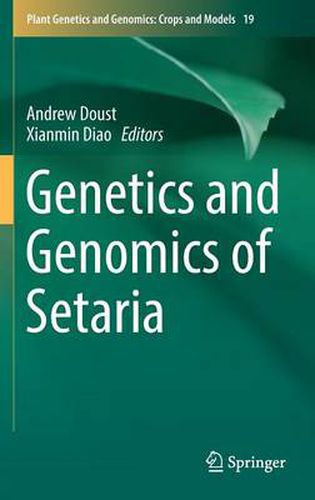
Setaria viridis and S.italica make up a model grass system to investigate C4 photosynthesis, cell wall biosynthesis, responses to drought, herbicide, and other environmental stressors, genome dynamics, developmental genetics and morphology, and interactions with microorganisms. Setaria viridis (green foxtail) is one of the world’s most widespread weeds, and its small size, native variation, rapidly burgeoning genetic and genomic resources, and transformability are making it the system of choice for both basic research and its translation into crop improvement. Its domesticated variant, S. italica (foxtail millet), is a drought-hardy cereal grown in China, India and Africa, and new breeding techniques show great potential for improving yields and nutrition for drought-prone regions. This book brings together for the first time evolutionary, genomic, genetic, and morphological analyses, together with protocols for growing and transforming Setaria, and approaches to high throughput genotyping and candidate gene analysis. Authors include major Setaria researchers from both the USA and overseas.
$9.00 standard shipping within Australia
FREE standard shipping within Australia for orders over $100.00
Express & International shipping calculated at checkout
Stock availability can be subject to change without notice. We recommend calling the shop or contacting our online team to check availability of low stock items. Please see our Shopping Online page for more details.
This title is printed to order. This book may have been self-published. If so, we cannot guarantee the quality of the content. In the main most books will have gone through the editing process however some may not. We therefore suggest that you be aware of this before ordering this book. If in doubt check either the author or publisher’s details as we are unable to accept any returns unless they are faulty. Please contact us if you have any questions.
Setaria viridis and S.italica make up a model grass system to investigate C4 photosynthesis, cell wall biosynthesis, responses to drought, herbicide, and other environmental stressors, genome dynamics, developmental genetics and morphology, and interactions with microorganisms. Setaria viridis (green foxtail) is one of the world’s most widespread weeds, and its small size, native variation, rapidly burgeoning genetic and genomic resources, and transformability are making it the system of choice for both basic research and its translation into crop improvement. Its domesticated variant, S. italica (foxtail millet), is a drought-hardy cereal grown in China, India and Africa, and new breeding techniques show great potential for improving yields and nutrition for drought-prone regions. This book brings together for the first time evolutionary, genomic, genetic, and morphological analyses, together with protocols for growing and transforming Setaria, and approaches to high throughput genotyping and candidate gene analysis. Authors include major Setaria researchers from both the USA and overseas.
Search our extensive online catalogue.
