Readings Newsletter
Become a Readings Member to make your shopping experience even easier.
Sign in or sign up for free!
You’re not far away from qualifying for FREE standard shipping within Australia
You’ve qualified for FREE standard shipping within Australia
The cart is loading…


This title is printed to order. This book may have been self-published. If so, we cannot guarantee the quality of the content. In the main most books will have gone through the editing process however some may not. We therefore suggest that you be aware of this before ordering this book. If in doubt check either the author or publisher’s details as we are unable to accept any returns unless they are faulty. Please contact us if you have any questions.
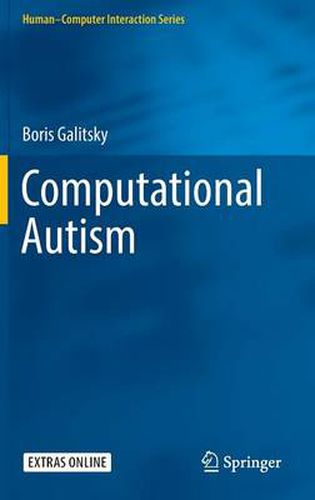
This book explores and evaluates accounts and models of autistic reasoning and cognition from a computational standpoint. The author investigates the limitations and peculiarities of autistic reasoning and sets out a remediation strategy to be used by a wide range of psychologists and rehabilitation personnel and will also be appreciated by computer scientists who are interested in the practical implementation of reasoning.
The author subjects the Theory of Mind (ToM) model to a formal analysis to investigate the limitations of autistic reasoning and proposes a formal model regarding mental attitudes and proposes a method to help those with autism navigate everyday living. Based on the concept of playing with computer based mental simulators, the NL_MAMS, is examined to see whether it is capable of modeling mental and emotional states of the real world to aid the emotional development of autistic children. Multiple autistic theories and strategies are also examined for possible computational cross-overs, providing researchers with a wide range of examples, tools and detailed case studies to work from.
Computational Autism will be an essential read to behavioral specialists, researcher’s, developers and designers who are interested in understanding and tackling the increasing prevalence of autism within modern society today.
$9.00 standard shipping within Australia
FREE standard shipping within Australia for orders over $100.00
Express & International shipping calculated at checkout
Stock availability can be subject to change without notice. We recommend calling the shop or contacting our online team to check availability of low stock items. Please see our Shopping Online page for more details.
This title is printed to order. This book may have been self-published. If so, we cannot guarantee the quality of the content. In the main most books will have gone through the editing process however some may not. We therefore suggest that you be aware of this before ordering this book. If in doubt check either the author or publisher’s details as we are unable to accept any returns unless they are faulty. Please contact us if you have any questions.
This book explores and evaluates accounts and models of autistic reasoning and cognition from a computational standpoint. The author investigates the limitations and peculiarities of autistic reasoning and sets out a remediation strategy to be used by a wide range of psychologists and rehabilitation personnel and will also be appreciated by computer scientists who are interested in the practical implementation of reasoning.
The author subjects the Theory of Mind (ToM) model to a formal analysis to investigate the limitations of autistic reasoning and proposes a formal model regarding mental attitudes and proposes a method to help those with autism navigate everyday living. Based on the concept of playing with computer based mental simulators, the NL_MAMS, is examined to see whether it is capable of modeling mental and emotional states of the real world to aid the emotional development of autistic children. Multiple autistic theories and strategies are also examined for possible computational cross-overs, providing researchers with a wide range of examples, tools and detailed case studies to work from.
Computational Autism will be an essential read to behavioral specialists, researcher’s, developers and designers who are interested in understanding and tackling the increasing prevalence of autism within modern society today.
Search our extensive online catalogue.
