Readings Newsletter
Become a Readings Member to make your shopping experience even easier.
Sign in or sign up for free!
You’re not far away from qualifying for FREE standard shipping within Australia
You’ve qualified for FREE standard shipping within Australia
The cart is loading…


This title is printed to order. This book may have been self-published. If so, we cannot guarantee the quality of the content. In the main most books will have gone through the editing process however some may not. We therefore suggest that you be aware of this before ordering this book. If in doubt check either the author or publisher’s details as we are unable to accept any returns unless they are faulty. Please contact us if you have any questions.
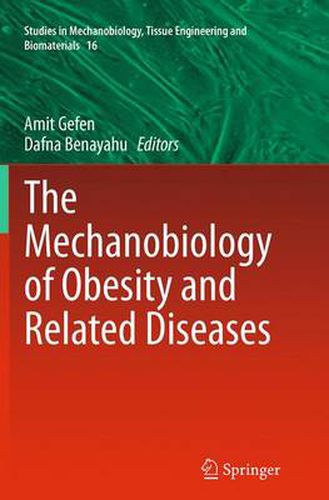
This volume describes the state-of-knowledge in the study of the relationships between mechanical loading states in tissues and common pathophysiologies related to increase in mass of adipose tissues and/or hyperglycemia which eventually lead to obesity, diabetes, insulin resistance, hyperlipidemia, metabolic inflammations, certain types of cancer and other related diseases.
There appears to be an interaction between the loading states in tissues and cells and these chronic conditions, as well as with factors such as age, gender and genetics of the individual. Bioengineering has made key contributions to this research field in providing technologies for cell biomechanics experimentation, microscopy and image processing, tissue engineering and multi-scale, multi-physics computational modeling. Topics at the frontier of this field of study include: the continuous monitoring of cell growth, proliferation and differentiation in response to mechanical factors such as stiffness of the extracellular matrix (ECM) and mechanical loads transferred through the ECM; mechanically-activated signaling pathways and molecular mechanisms; effects of different loading regimes and mechanical environments on differentiation fates of mesenchymal stem cells (MSCs) into myogenic and osteogenic versus adipogenic lineages; the interactions between nutrition and mechanotransduction; cell morphology, focal adhesion patterns and cytoskeletal remodeling changes in adipogenesis; activation of receptors related to diabetes by mechanical forces; brown and white adipose plasticity and its regulation by mechanical factors.
$9.00 standard shipping within Australia
FREE standard shipping within Australia for orders over $100.00
Express & International shipping calculated at checkout
Stock availability can be subject to change without notice. We recommend calling the shop or contacting our online team to check availability of low stock items. Please see our Shopping Online page for more details.
This title is printed to order. This book may have been self-published. If so, we cannot guarantee the quality of the content. In the main most books will have gone through the editing process however some may not. We therefore suggest that you be aware of this before ordering this book. If in doubt check either the author or publisher’s details as we are unable to accept any returns unless they are faulty. Please contact us if you have any questions.
This volume describes the state-of-knowledge in the study of the relationships between mechanical loading states in tissues and common pathophysiologies related to increase in mass of adipose tissues and/or hyperglycemia which eventually lead to obesity, diabetes, insulin resistance, hyperlipidemia, metabolic inflammations, certain types of cancer and other related diseases.
There appears to be an interaction between the loading states in tissues and cells and these chronic conditions, as well as with factors such as age, gender and genetics of the individual. Bioengineering has made key contributions to this research field in providing technologies for cell biomechanics experimentation, microscopy and image processing, tissue engineering and multi-scale, multi-physics computational modeling. Topics at the frontier of this field of study include: the continuous monitoring of cell growth, proliferation and differentiation in response to mechanical factors such as stiffness of the extracellular matrix (ECM) and mechanical loads transferred through the ECM; mechanically-activated signaling pathways and molecular mechanisms; effects of different loading regimes and mechanical environments on differentiation fates of mesenchymal stem cells (MSCs) into myogenic and osteogenic versus adipogenic lineages; the interactions between nutrition and mechanotransduction; cell morphology, focal adhesion patterns and cytoskeletal remodeling changes in adipogenesis; activation of receptors related to diabetes by mechanical forces; brown and white adipose plasticity and its regulation by mechanical factors.
Search our extensive online catalogue.
