Readings Newsletter
Become a Readings Member to make your shopping experience even easier.
Sign in or sign up for free!
You’re not far away from qualifying for FREE standard shipping within Australia
You’ve qualified for FREE standard shipping within Australia
The cart is loading…


This title is printed to order. This book may have been self-published. If so, we cannot guarantee the quality of the content. In the main most books will have gone through the editing process however some may not. We therefore suggest that you be aware of this before ordering this book. If in doubt check either the author or publisher’s details as we are unable to accept any returns unless they are faulty. Please contact us if you have any questions.
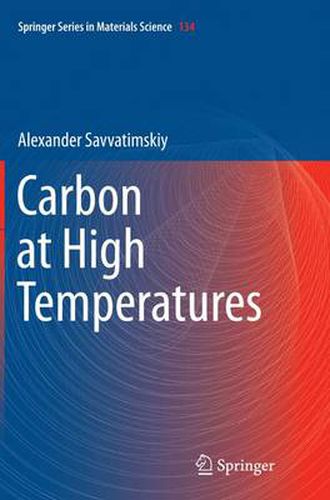
This book deals with the properties and behavior of carbon at high temperatures. It presents new methods and new ways to obtain the liquid phase of carbon. Melting of graphite and the properties of liquid carbon are presented under stationary heat and pulse methods. Metal like properties of molten graphite at high initial density are indicated. A new possible transition of liquid carbon from metal to nonmetal behavior much above the melting point is mentioned. Methodical questions of pulse heating, in particular the role of pinch-pressure in receiving a liquid state of carbon, are discussed. The reader finds evidence about the necessity of applying high pressure (higher than 100 bar) to melt graphite (melting temperature 4800+/-100 K). The reader can verify the advantage of volume pulse electrical heating before surface laser heating to study the physical properties of carbon, including enthalpy, heat capacity, electrical resistivity and temperature. The advantages of fast heating of graphite by pulsed electric current during a few microseconds are shown. The data obtained for the heat capacity of liquid carbon under constant pressure and constant volume were used to estimate the behavior at temperatures much higher 5000 K.
$9.00 standard shipping within Australia
FREE standard shipping within Australia for orders over $100.00
Express & International shipping calculated at checkout
Stock availability can be subject to change without notice. We recommend calling the shop or contacting our online team to check availability of low stock items. Please see our Shopping Online page for more details.
This title is printed to order. This book may have been self-published. If so, we cannot guarantee the quality of the content. In the main most books will have gone through the editing process however some may not. We therefore suggest that you be aware of this before ordering this book. If in doubt check either the author or publisher’s details as we are unable to accept any returns unless they are faulty. Please contact us if you have any questions.
This book deals with the properties and behavior of carbon at high temperatures. It presents new methods and new ways to obtain the liquid phase of carbon. Melting of graphite and the properties of liquid carbon are presented under stationary heat and pulse methods. Metal like properties of molten graphite at high initial density are indicated. A new possible transition of liquid carbon from metal to nonmetal behavior much above the melting point is mentioned. Methodical questions of pulse heating, in particular the role of pinch-pressure in receiving a liquid state of carbon, are discussed. The reader finds evidence about the necessity of applying high pressure (higher than 100 bar) to melt graphite (melting temperature 4800+/-100 K). The reader can verify the advantage of volume pulse electrical heating before surface laser heating to study the physical properties of carbon, including enthalpy, heat capacity, electrical resistivity and temperature. The advantages of fast heating of graphite by pulsed electric current during a few microseconds are shown. The data obtained for the heat capacity of liquid carbon under constant pressure and constant volume were used to estimate the behavior at temperatures much higher 5000 K.
Search our extensive online catalogue.
