Readings Newsletter
Become a Readings Member to make your shopping experience even easier.
Sign in or sign up for free!
You’re not far away from qualifying for FREE standard shipping within Australia
You’ve qualified for FREE standard shipping within Australia
The cart is loading…


This title is printed to order. This book may have been self-published. If so, we cannot guarantee the quality of the content. In the main most books will have gone through the editing process however some may not. We therefore suggest that you be aware of this before ordering this book. If in doubt check either the author or publisher’s details as we are unable to accept any returns unless they are faulty. Please contact us if you have any questions.
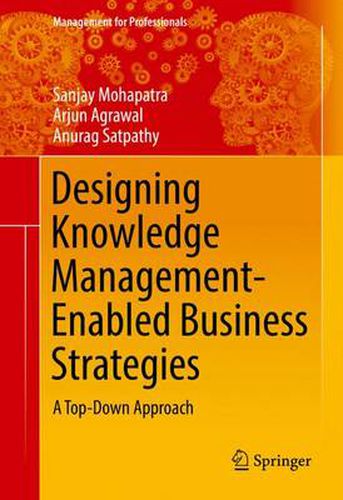
This book provides a practical approach to designing and implementing a Knowledge Management (KM) Strategy. The book explains how to design KM strategy so as to align business goals with KM objectives. The book also presents an approach for implementing KM strategy so as to make it sustainable. It covers all basic KM concepts, components of KM and the steps that are required for designing a KM strategy. As a result, the book can be used by beginners as well as practitioners.
Knowledge management is a discipline that promotes an integrated approach to identifying, capturing, evaluating, retrieving, and sharing all of an enterprise’s information assets. These assets may include databases, documents, policies, procedures, and previously un-captured expertise and experience in individual workers. Knowledge is considered to be the learning that results from experience and is embedded within individuals. Sometimes the knowledge is gained through critical thinking, watching others, and observing results of others. These observations then form a pattern which is converted in a ‘generic form’ to knowledge. This implies that knowledge can be formed only after data (which is generated through experience or observation) is grouped into information and then this information pattern is made generic wisdom. However, dissemination and acceptance of this knowledge becomes a key factor in knowledge management. The knowledge pyramid represents the usual concept of knowledge transformations, where data is transformed into information, and information is transformed into knowledge. Many organizations have struggled to manage knowledge and translate it into business benefits. This book is an attempt to show them how it can be done.
$9.00 standard shipping within Australia
FREE standard shipping within Australia for orders over $100.00
Express & International shipping calculated at checkout
Stock availability can be subject to change without notice. We recommend calling the shop or contacting our online team to check availability of low stock items. Please see our Shopping Online page for more details.
This title is printed to order. This book may have been self-published. If so, we cannot guarantee the quality of the content. In the main most books will have gone through the editing process however some may not. We therefore suggest that you be aware of this before ordering this book. If in doubt check either the author or publisher’s details as we are unable to accept any returns unless they are faulty. Please contact us if you have any questions.
This book provides a practical approach to designing and implementing a Knowledge Management (KM) Strategy. The book explains how to design KM strategy so as to align business goals with KM objectives. The book also presents an approach for implementing KM strategy so as to make it sustainable. It covers all basic KM concepts, components of KM and the steps that are required for designing a KM strategy. As a result, the book can be used by beginners as well as practitioners.
Knowledge management is a discipline that promotes an integrated approach to identifying, capturing, evaluating, retrieving, and sharing all of an enterprise’s information assets. These assets may include databases, documents, policies, procedures, and previously un-captured expertise and experience in individual workers. Knowledge is considered to be the learning that results from experience and is embedded within individuals. Sometimes the knowledge is gained through critical thinking, watching others, and observing results of others. These observations then form a pattern which is converted in a ‘generic form’ to knowledge. This implies that knowledge can be formed only after data (which is generated through experience or observation) is grouped into information and then this information pattern is made generic wisdom. However, dissemination and acceptance of this knowledge becomes a key factor in knowledge management. The knowledge pyramid represents the usual concept of knowledge transformations, where data is transformed into information, and information is transformed into knowledge. Many organizations have struggled to manage knowledge and translate it into business benefits. This book is an attempt to show them how it can be done.
Search our extensive online catalogue.
