Readings Newsletter
Become a Readings Member to make your shopping experience even easier.
Sign in or sign up for free!
You’re not far away from qualifying for FREE standard shipping within Australia
You’ve qualified for FREE standard shipping within Australia
The cart is loading…


This title is printed to order. This book may have been self-published. If so, we cannot guarantee the quality of the content. In the main most books will have gone through the editing process however some may not. We therefore suggest that you be aware of this before ordering this book. If in doubt check either the author or publisher’s details as we are unable to accept any returns unless they are faulty. Please contact us if you have any questions.
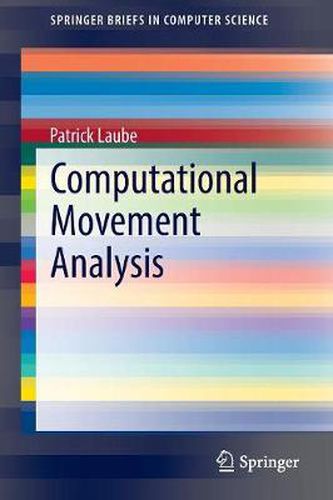
This SpringerBrief discusses the characteristics of spatiotemporal movement data, including uncertainty and scale. It investigates three core aspects of Computational Movement Analysis: Conceptual modeling of movement and movement spaces, spatiotemporal analysis methods aiming at a better understanding of movement processes (with a focus on data mining for movement patterns), and using decentralized spatial computing methods in movement analysis. The author presents Computational Movement Analysis as an interdisciplinary umbrella for analyzing movement processes with methods from a range of fields including GIScience, spatiotemporal databases and data mining. Key challenges in Computational Movement Analysis include bridging the semantic gap, privacy issues when movement data involves people, incorporating big and open data, and opportunities for decentralized movement analysis arising from the internet of things. The interdisciplinary concepts of Computational Movement Analysis make this an important book for professionals and students in computer science, geographic information science and its application areas, especially movement ecology and transportation research.
$9.00 standard shipping within Australia
FREE standard shipping within Australia for orders over $100.00
Express & International shipping calculated at checkout
Stock availability can be subject to change without notice. We recommend calling the shop or contacting our online team to check availability of low stock items. Please see our Shopping Online page for more details.
This title is printed to order. This book may have been self-published. If so, we cannot guarantee the quality of the content. In the main most books will have gone through the editing process however some may not. We therefore suggest that you be aware of this before ordering this book. If in doubt check either the author or publisher’s details as we are unable to accept any returns unless they are faulty. Please contact us if you have any questions.
This SpringerBrief discusses the characteristics of spatiotemporal movement data, including uncertainty and scale. It investigates three core aspects of Computational Movement Analysis: Conceptual modeling of movement and movement spaces, spatiotemporal analysis methods aiming at a better understanding of movement processes (with a focus on data mining for movement patterns), and using decentralized spatial computing methods in movement analysis. The author presents Computational Movement Analysis as an interdisciplinary umbrella for analyzing movement processes with methods from a range of fields including GIScience, spatiotemporal databases and data mining. Key challenges in Computational Movement Analysis include bridging the semantic gap, privacy issues when movement data involves people, incorporating big and open data, and opportunities for decentralized movement analysis arising from the internet of things. The interdisciplinary concepts of Computational Movement Analysis make this an important book for professionals and students in computer science, geographic information science and its application areas, especially movement ecology and transportation research.
Search our extensive online catalogue.
