Readings Newsletter
Become a Readings Member to make your shopping experience even easier.
Sign in or sign up for free!
You’re not far away from qualifying for FREE standard shipping within Australia
You’ve qualified for FREE standard shipping within Australia
The cart is loading…


This title is printed to order. This book may have been self-published. If so, we cannot guarantee the quality of the content. In the main most books will have gone through the editing process however some may not. We therefore suggest that you be aware of this before ordering this book. If in doubt check either the author or publisher’s details as we are unable to accept any returns unless they are faulty. Please contact us if you have any questions.
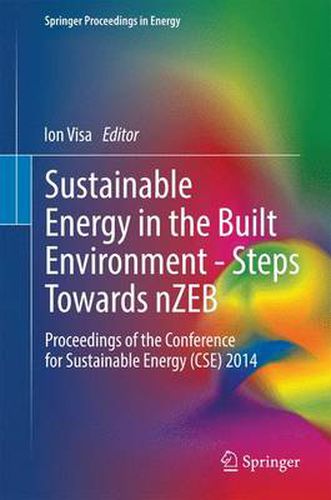
This book addresses the main challenges faced today in implementing the Nearly Zero Energy Buildings (nZEB) concept. The book starts with a chapter that addresses problems related to the energy demand and renewable energy sources available in the built environment, along with the restrictions and opportunities in developing sustainable, efficient and affordable solutions, also gaining aesthetic and architectural acceptance. Advanced solutions to cover the energy needs by using various renewable-based energy mixes are presented in two chapters. These two chapters discuss the problem of conversion efficiency at the level of components and systems, aiming at giving value to the variable renewable energy sources, in producing thermal and electric energy. The concept is discussed further in a chapter on advanced solutions for water re-use and recycling wastes as second raw materials. The need for new strategies and implementation tools, for education and training is addressed in the final chapter as part of the nZEB concept, towards sustainable communities.
The sub-chapters of the book were openly presented during the 4th Edition of the Conference for Sustainable Energy, held 6-8 November, 2014 and organized by the R&D Centre Renewable Energy Systems and Recycling at the Transilvania University of Brasov, Romania. This event was developed under the patronage of the International Federation for the Promotion of Mechanism and Machine Science (IFToMM), through the Technical Committee Sustainable Energy Systems.
$9.00 standard shipping within Australia
FREE standard shipping within Australia for orders over $100.00
Express & International shipping calculated at checkout
Stock availability can be subject to change without notice. We recommend calling the shop or contacting our online team to check availability of low stock items. Please see our Shopping Online page for more details.
This title is printed to order. This book may have been self-published. If so, we cannot guarantee the quality of the content. In the main most books will have gone through the editing process however some may not. We therefore suggest that you be aware of this before ordering this book. If in doubt check either the author or publisher’s details as we are unable to accept any returns unless they are faulty. Please contact us if you have any questions.
This book addresses the main challenges faced today in implementing the Nearly Zero Energy Buildings (nZEB) concept. The book starts with a chapter that addresses problems related to the energy demand and renewable energy sources available in the built environment, along with the restrictions and opportunities in developing sustainable, efficient and affordable solutions, also gaining aesthetic and architectural acceptance. Advanced solutions to cover the energy needs by using various renewable-based energy mixes are presented in two chapters. These two chapters discuss the problem of conversion efficiency at the level of components and systems, aiming at giving value to the variable renewable energy sources, in producing thermal and electric energy. The concept is discussed further in a chapter on advanced solutions for water re-use and recycling wastes as second raw materials. The need for new strategies and implementation tools, for education and training is addressed in the final chapter as part of the nZEB concept, towards sustainable communities.
The sub-chapters of the book were openly presented during the 4th Edition of the Conference for Sustainable Energy, held 6-8 November, 2014 and organized by the R&D Centre Renewable Energy Systems and Recycling at the Transilvania University of Brasov, Romania. This event was developed under the patronage of the International Federation for the Promotion of Mechanism and Machine Science (IFToMM), through the Technical Committee Sustainable Energy Systems.
Search our extensive online catalogue.
