Readings Newsletter
Become a Readings Member to make your shopping experience even easier.
Sign in or sign up for free!
You’re not far away from qualifying for FREE standard shipping within Australia
You’ve qualified for FREE standard shipping within Australia
The cart is loading…


This title is printed to order. This book may have been self-published. If so, we cannot guarantee the quality of the content. In the main most books will have gone through the editing process however some may not. We therefore suggest that you be aware of this before ordering this book. If in doubt check either the author or publisher’s details as we are unable to accept any returns unless they are faulty. Please contact us if you have any questions.
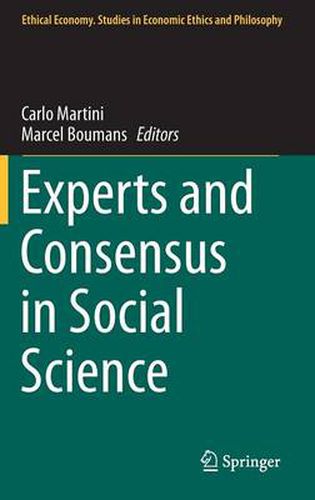
This book brings together the research of philosophers, sociologists, and social scientists. It examines those areas of scientific practice where reliance on the subjective judgment of experts and practitioners is the main source of useful knowledge to address and possibly, bring solutions to social problems. A common phenomenon in applications of science is that objective evidence does not point to a single answer or solution, to a problem. Reliance on subjective judgment, then, becomes necessary, despite the known fact that hunches, even those of putative experts, often provide information that is not very accurate, and that experts are prone to fallacies and biases. The book looks at how experts reach consensus in the social sciences, and which experts are relevant to which problems. It aims to answer many questions, the main one being: Can we start building a normative theory of expertise on the basis of the evidence that social scientists, sociologists and philosophers have uncovered?
$9.00 standard shipping within Australia
FREE standard shipping within Australia for orders over $100.00
Express & International shipping calculated at checkout
Stock availability can be subject to change without notice. We recommend calling the shop or contacting our online team to check availability of low stock items. Please see our Shopping Online page for more details.
This title is printed to order. This book may have been self-published. If so, we cannot guarantee the quality of the content. In the main most books will have gone through the editing process however some may not. We therefore suggest that you be aware of this before ordering this book. If in doubt check either the author or publisher’s details as we are unable to accept any returns unless they are faulty. Please contact us if you have any questions.
This book brings together the research of philosophers, sociologists, and social scientists. It examines those areas of scientific practice where reliance on the subjective judgment of experts and practitioners is the main source of useful knowledge to address and possibly, bring solutions to social problems. A common phenomenon in applications of science is that objective evidence does not point to a single answer or solution, to a problem. Reliance on subjective judgment, then, becomes necessary, despite the known fact that hunches, even those of putative experts, often provide information that is not very accurate, and that experts are prone to fallacies and biases. The book looks at how experts reach consensus in the social sciences, and which experts are relevant to which problems. It aims to answer many questions, the main one being: Can we start building a normative theory of expertise on the basis of the evidence that social scientists, sociologists and philosophers have uncovered?
Search our extensive online catalogue.
