Readings Newsletter
Become a Readings Member to make your shopping experience even easier.
Sign in or sign up for free!
You’re not far away from qualifying for FREE standard shipping within Australia
You’ve qualified for FREE standard shipping within Australia
The cart is loading…


This title is printed to order. This book may have been self-published. If so, we cannot guarantee the quality of the content. In the main most books will have gone through the editing process however some may not. We therefore suggest that you be aware of this before ordering this book. If in doubt check either the author or publisher’s details as we are unable to accept any returns unless they are faulty. Please contact us if you have any questions.
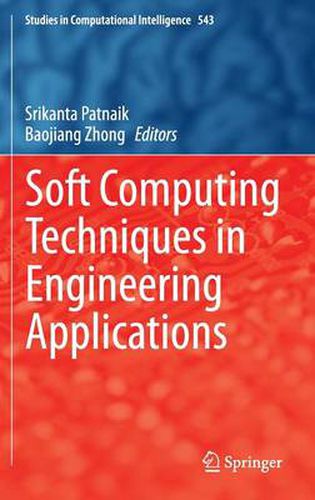
The Soft Computing techniques, which are based on the information processing of biological systems are now massively used in the area of pattern recognition, making prediction & planning, as well as acting on the environment. Ideally speaking, soft computing is not a subject of homogeneous concepts and techniques; rather, it is an amalgamation of distinct methods that confirms to its guiding principle. At present, the main aim of soft computing is to exploit the tolerance for imprecision and uncertainty to achieve tractability, robustness and low solutions cost. The principal constituents of soft computing techniques are probabilistic reasoning, fuzzy logic, neuro-computing, genetic algorithms, belief networks, chaotic systems, as well as learning theory. This book covers contributions from various authors to demonstrate the use of soft computing techniques in various applications of engineering.
$9.00 standard shipping within Australia
FREE standard shipping within Australia for orders over $100.00
Express & International shipping calculated at checkout
Stock availability can be subject to change without notice. We recommend calling the shop or contacting our online team to check availability of low stock items. Please see our Shopping Online page for more details.
This title is printed to order. This book may have been self-published. If so, we cannot guarantee the quality of the content. In the main most books will have gone through the editing process however some may not. We therefore suggest that you be aware of this before ordering this book. If in doubt check either the author or publisher’s details as we are unable to accept any returns unless they are faulty. Please contact us if you have any questions.
The Soft Computing techniques, which are based on the information processing of biological systems are now massively used in the area of pattern recognition, making prediction & planning, as well as acting on the environment. Ideally speaking, soft computing is not a subject of homogeneous concepts and techniques; rather, it is an amalgamation of distinct methods that confirms to its guiding principle. At present, the main aim of soft computing is to exploit the tolerance for imprecision and uncertainty to achieve tractability, robustness and low solutions cost. The principal constituents of soft computing techniques are probabilistic reasoning, fuzzy logic, neuro-computing, genetic algorithms, belief networks, chaotic systems, as well as learning theory. This book covers contributions from various authors to demonstrate the use of soft computing techniques in various applications of engineering.
Search our extensive online catalogue.
