Readings Newsletter
Become a Readings Member to make your shopping experience even easier.
Sign in or sign up for free!
You’re not far away from qualifying for FREE standard shipping within Australia
You’ve qualified for FREE standard shipping within Australia
The cart is loading…


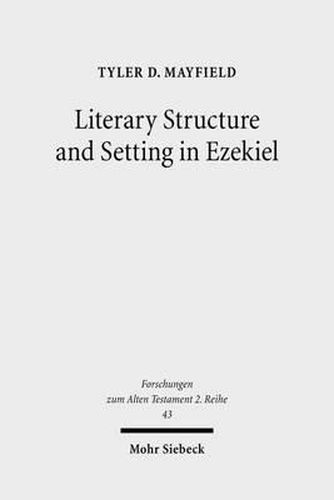
Historically, form critical studies of prophetic literature have answered mainly historical questions. However, scholars recently have begun to address literary topics as well. This study of the book of Ezekiel addresses two such topics-literary structure and literary setting-in order to read Ezekiel as a deliberate work of literature, a prophetic composition with a highly-structured form and an intentional placement of units. Mayfield provides a discussion of the role of literary markers in structure and proposes a literary structure of the book based on two formulas: the chronological formula, which divides the book into 13 macrounits, and the prophetic word formula. Then, the author argues for contextual readings of selected Ezekiel passages using literary structure to highlight literary settings. One of these contextual readings presents the unlikely macrounits, Ezek 24-25 and Ezek 32:17-33:20, as transitional units within the book.
$9.00 standard shipping within Australia
FREE standard shipping within Australia for orders over $100.00
Express & International shipping calculated at checkout
Stock availability can be subject to change without notice. We recommend calling the shop or contacting our online team to check availability of low stock items. Please see our Shopping Online page for more details.
Historically, form critical studies of prophetic literature have answered mainly historical questions. However, scholars recently have begun to address literary topics as well. This study of the book of Ezekiel addresses two such topics-literary structure and literary setting-in order to read Ezekiel as a deliberate work of literature, a prophetic composition with a highly-structured form and an intentional placement of units. Mayfield provides a discussion of the role of literary markers in structure and proposes a literary structure of the book based on two formulas: the chronological formula, which divides the book into 13 macrounits, and the prophetic word formula. Then, the author argues for contextual readings of selected Ezekiel passages using literary structure to highlight literary settings. One of these contextual readings presents the unlikely macrounits, Ezek 24-25 and Ezek 32:17-33:20, as transitional units within the book.
Search our extensive online catalogue.
