Readings Newsletter
Become a Readings Member to make your shopping experience even easier.
Sign in or sign up for free!
You’re not far away from qualifying for FREE standard shipping within Australia
You’ve qualified for FREE standard shipping within Australia
The cart is loading…


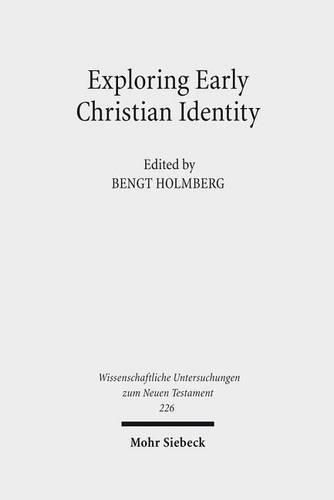
The main point of emphasis in the book is that approaching the Christian movement’s early history through investigating its identity helps us to understand how the followers of Jesus developed from an intra-Jewish messianic renewal movement into a new religion with a major Gentile membership and major differences from its Jewish matrix - all in only a hundred years. Identity is not simply a collection of beliefs that was agreed upon by many first-century Christians. It is embedded, or rather, embodied in real life as participation in the founding myths (narrativized memory of and accepted teaching on Jesus), in cults and rituals as well as in ethical teaching and behavioral norms, crystallized into social relations and institutions. This is a dynamic feedback process, full of conflicts and difficulties, both internal and caused by the surrounding society and culture. The authors explore different aspects of identity, such as how the Gospels’ narrativization of the social memory shapes and is shaped by the identity of the groups from which they emerge, how labels such as Jewish and Christian should and should not be understood, the identity-forming role of behavioral norms in letters, and the interplay between competing leadership ideals and the underlying unity of different Christian groups. They also show that identity formation is not necessarily related to innovation in moral teaching, nor averse to making use of ancient conventions of masculinity with their emphasis on dominance.
$9.00 standard shipping within Australia
FREE standard shipping within Australia for orders over $100.00
Express & International shipping calculated at checkout
Stock availability can be subject to change without notice. We recommend calling the shop or contacting our online team to check availability of low stock items. Please see our Shopping Online page for more details.
The main point of emphasis in the book is that approaching the Christian movement’s early history through investigating its identity helps us to understand how the followers of Jesus developed from an intra-Jewish messianic renewal movement into a new religion with a major Gentile membership and major differences from its Jewish matrix - all in only a hundred years. Identity is not simply a collection of beliefs that was agreed upon by many first-century Christians. It is embedded, or rather, embodied in real life as participation in the founding myths (narrativized memory of and accepted teaching on Jesus), in cults and rituals as well as in ethical teaching and behavioral norms, crystallized into social relations and institutions. This is a dynamic feedback process, full of conflicts and difficulties, both internal and caused by the surrounding society and culture. The authors explore different aspects of identity, such as how the Gospels’ narrativization of the social memory shapes and is shaped by the identity of the groups from which they emerge, how labels such as Jewish and Christian should and should not be understood, the identity-forming role of behavioral norms in letters, and the interplay between competing leadership ideals and the underlying unity of different Christian groups. They also show that identity formation is not necessarily related to innovation in moral teaching, nor averse to making use of ancient conventions of masculinity with their emphasis on dominance.
Search our extensive online catalogue.
