Readings Newsletter
Become a Readings Member to make your shopping experience even easier.
Sign in or sign up for free!
You’re not far away from qualifying for FREE standard shipping within Australia
You’ve qualified for FREE standard shipping within Australia
The cart is loading…


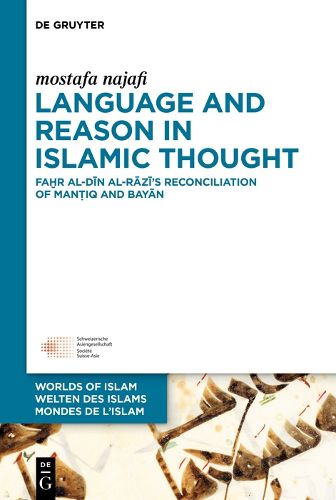
This study delves into Fakhr al-Din al-Razi's (1149-1210) theory of language, a pivotal yet underexplored facet of his intellectual legacy. Moving beyond his interactions with the Avicennian tradition, it positions al-Razi as an independent thinker. The work examines two often misinterpreted dimensions of his thought: his assertion that all concepts are self-evident, challenging traditional epistemology on conceptualization (ta?awwur) as advanced by Abu Na?r al-Farabi (870-950) and Ibn Sina (980-1037), and his refinement of ?Abd-l-Qahir al-Gurgani's (1009-1078) theory of linguistic composition (na?m), emphasizing language's expressive capacity (bayan) and the Qur?an's unique linguistic structure. By analyzing these facets, the study reconstructs al-Razi's comprehensive framework for understanding linguistic phenomena, bridging the Greek-inspired falsafa tradition and the rich Arabic linguistic heritage. This exploration offers scholars and students a nuanced perspective on Islamic intellectual history, highlighting al-Razi's role in harmonizing diverse traditions and advancing a profound theory of linguistic understanding. This theory is essential for engaging with al-Razi's extensive written heritage.
$9.00 standard shipping within Australia
FREE standard shipping within Australia for orders over $100.00
Express & International shipping calculated at checkout
Stock availability can be subject to change without notice. We recommend calling the shop or contacting our online team to check availability of low stock items. Please see our Shopping Online page for more details.
This study delves into Fakhr al-Din al-Razi's (1149-1210) theory of language, a pivotal yet underexplored facet of his intellectual legacy. Moving beyond his interactions with the Avicennian tradition, it positions al-Razi as an independent thinker. The work examines two often misinterpreted dimensions of his thought: his assertion that all concepts are self-evident, challenging traditional epistemology on conceptualization (ta?awwur) as advanced by Abu Na?r al-Farabi (870-950) and Ibn Sina (980-1037), and his refinement of ?Abd-l-Qahir al-Gurgani's (1009-1078) theory of linguistic composition (na?m), emphasizing language's expressive capacity (bayan) and the Qur?an's unique linguistic structure. By analyzing these facets, the study reconstructs al-Razi's comprehensive framework for understanding linguistic phenomena, bridging the Greek-inspired falsafa tradition and the rich Arabic linguistic heritage. This exploration offers scholars and students a nuanced perspective on Islamic intellectual history, highlighting al-Razi's role in harmonizing diverse traditions and advancing a profound theory of linguistic understanding. This theory is essential for engaging with al-Razi's extensive written heritage.
Search our extensive online catalogue.
