Readings Newsletter
Become a Readings Member to make your shopping experience even easier.
Sign in or sign up for free!
You’re not far away from qualifying for FREE standard shipping within Australia
You’ve qualified for FREE standard shipping within Australia
The cart is loading…


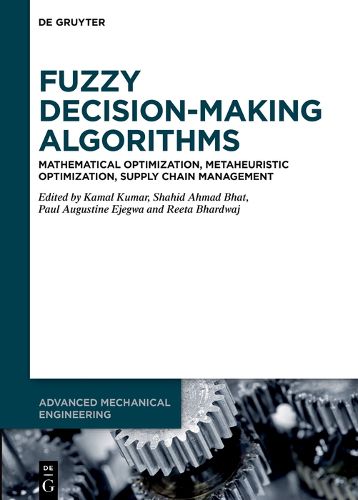
This book explores the blend of metaheuristic optimization algorithms and fuzzy decision-making paradigms to reinforce supply chain sustainability and viability. The combination of mathematical and metaheuristic optimization methods based on natural processes and fuzzy decision-making allows models to be built that can effectively deal with the multifaceted issues of contemporary supply chains. This book provides various techniques of decision-making, such as entropy measures, distance measures, coefficient correlation, aggregating operators, TOPSIS, EDAS, etc. This books overcomes the drawbacks of existing fuzzy decision-making methods This book also provides case studies in which metaheuristic decision-making algorithms have been applied to enhance the sustainability and viability of supply chains. One such notable example is green supplier selection in supply chain management. The changing supply chain management landscape offers many areas for future research, like investigating the intersection of mathematical and metaheuristic fuzzy decision-making algorithms with new technologies such as the Internet of Things (IoT) and artificial intelligence, which can create more responsive and adaptive supply chains.
$9.00 standard shipping within Australia
FREE standard shipping within Australia for orders over $100.00
Express & International shipping calculated at checkout
Stock availability can be subject to change without notice. We recommend calling the shop or contacting our online team to check availability of low stock items. Please see our Shopping Online page for more details.
This book explores the blend of metaheuristic optimization algorithms and fuzzy decision-making paradigms to reinforce supply chain sustainability and viability. The combination of mathematical and metaheuristic optimization methods based on natural processes and fuzzy decision-making allows models to be built that can effectively deal with the multifaceted issues of contemporary supply chains. This book provides various techniques of decision-making, such as entropy measures, distance measures, coefficient correlation, aggregating operators, TOPSIS, EDAS, etc. This books overcomes the drawbacks of existing fuzzy decision-making methods This book also provides case studies in which metaheuristic decision-making algorithms have been applied to enhance the sustainability and viability of supply chains. One such notable example is green supplier selection in supply chain management. The changing supply chain management landscape offers many areas for future research, like investigating the intersection of mathematical and metaheuristic fuzzy decision-making algorithms with new technologies such as the Internet of Things (IoT) and artificial intelligence, which can create more responsive and adaptive supply chains.
Search our extensive online catalogue.
