Readings Newsletter
Become a Readings Member to make your shopping experience even easier.
Sign in or sign up for free!
You’re not far away from qualifying for FREE standard shipping within Australia
You’ve qualified for FREE standard shipping within Australia
The cart is loading…


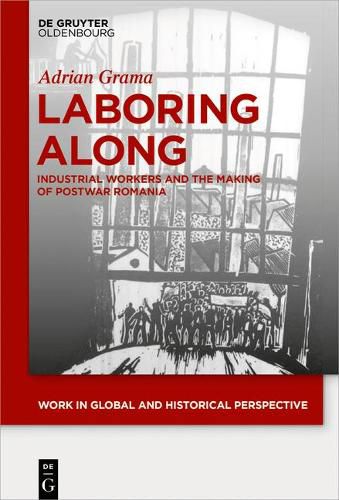
Products of war rather than revolution, the socialist regimes of Eastern Europe emerged in a global conjuncture defined by the aftermath of the Second World War. How did these regimes manage to overcome the domestic impact of the war and build socialism at the same time? This book shows how a commitment to productivity structured the transition from the period of postwar reconstruction to the take-off of industrial development during the late 1950s. Conceived as (1) pacification of labor relations, (2) the recovery of managerial authority, (3) monetarization of everyday life, (4) rationalization and (5) austerity, the politics of productivity provides a comprehensive conceptual framework for grasping together the end of the postwar period and the building of state socialism in Eastern Europe. By revealing how the social consequences of the Second World War were absorbed in the transition to authoritarian state socialism in the age of the rolling steel mill, this book carries implications for the way in which we may think about the aftermath of wars, reconstruction and development during the second half of the twentieth century.
$9.00 standard shipping within Australia
FREE standard shipping within Australia for orders over $100.00
Express & International shipping calculated at checkout
Stock availability can be subject to change without notice. We recommend calling the shop or contacting our online team to check availability of low stock items. Please see our Shopping Online page for more details.
Products of war rather than revolution, the socialist regimes of Eastern Europe emerged in a global conjuncture defined by the aftermath of the Second World War. How did these regimes manage to overcome the domestic impact of the war and build socialism at the same time? This book shows how a commitment to productivity structured the transition from the period of postwar reconstruction to the take-off of industrial development during the late 1950s. Conceived as (1) pacification of labor relations, (2) the recovery of managerial authority, (3) monetarization of everyday life, (4) rationalization and (5) austerity, the politics of productivity provides a comprehensive conceptual framework for grasping together the end of the postwar period and the building of state socialism in Eastern Europe. By revealing how the social consequences of the Second World War were absorbed in the transition to authoritarian state socialism in the age of the rolling steel mill, this book carries implications for the way in which we may think about the aftermath of wars, reconstruction and development during the second half of the twentieth century.
Search our extensive online catalogue.
