Readings Newsletter
Become a Readings Member to make your shopping experience even easier.
Sign in or sign up for free!
You’re not far away from qualifying for FREE standard shipping within Australia
You’ve qualified for FREE standard shipping within Australia
The cart is loading…


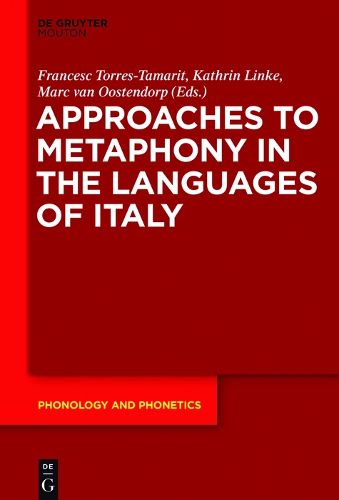
This volume presents current work on a topic in Romance linguistics that still informs linguistic theory to this day: metaphony in the languages of Italy. Papers discuss fundamental research topics such as phonological opacity in the light of chain shifts, post-tonic harmony and consonant transparency, the role of morphosyntax in the typology of metaphony, the explanatory adequacy of feature-based versus element-based analyses, and the locus of metaphony in grammar. Other chapters present new experimental data, thus building a more accurate empirical foundation for the study of metaphony. We envision the volume to become a reference book not only for an updated descriptive survey of metaphonic patterns in Italy but also a thorough discussion of the challenges that metaphony poses for different (morpho)phonological theories. The book bridges the gap between descriptive works and theoretical thinking in the study of metaphony.
$9.00 standard shipping within Australia
FREE standard shipping within Australia for orders over $100.00
Express & International shipping calculated at checkout
Stock availability can be subject to change without notice. We recommend calling the shop or contacting our online team to check availability of low stock items. Please see our Shopping Online page for more details.
This volume presents current work on a topic in Romance linguistics that still informs linguistic theory to this day: metaphony in the languages of Italy. Papers discuss fundamental research topics such as phonological opacity in the light of chain shifts, post-tonic harmony and consonant transparency, the role of morphosyntax in the typology of metaphony, the explanatory adequacy of feature-based versus element-based analyses, and the locus of metaphony in grammar. Other chapters present new experimental data, thus building a more accurate empirical foundation for the study of metaphony. We envision the volume to become a reference book not only for an updated descriptive survey of metaphonic patterns in Italy but also a thorough discussion of the challenges that metaphony poses for different (morpho)phonological theories. The book bridges the gap between descriptive works and theoretical thinking in the study of metaphony.
Search our extensive online catalogue.
