Readings Newsletter
Become a Readings Member to make your shopping experience even easier.
Sign in or sign up for free!
You’re not far away from qualifying for FREE standard shipping within Australia
You’ve qualified for FREE standard shipping within Australia
The cart is loading…


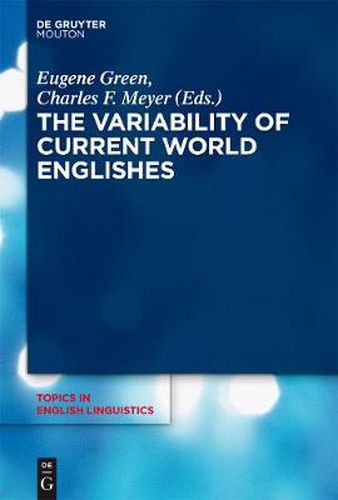
Faces of English explores the phenomenon of increasing dialects, varieties, and creoles, even as the spread of globalization supports an apparently growing uniformity among nations. The book’s chapters supply descriptions of Jamaican English in Toronto, English as an L2 in a South African mining township, Chinese and English contact in Singapore, unexpected, emergent variants in Canadian English, and innovations in the English of West Virginia. Further, the book offers some perspective on internet English as well as on abiding uniformities in the lexicon and grammar of standard varieties. In the analyses of this heterogeneous growth such considerations as speakers’ sociolinguistic profiles, phonological, morpho-syntactic, and lexical variables, frequencies, and typological patterns provide ample insight in the current status of English both in oral and electronic communities. The opening chapter presents a theoretical framework that argues for linguistic typology as conceptually resourceful in accommodating techniques of analysis and in distinguishing the wide arrays of English found throughout the globe. One clear function for Faces of English is that of a catalyst: to spur studies of diversities in English (and in other languages), to suggest approaches to adapt, to invite counterargument and developments in analysis.
$9.00 standard shipping within Australia
FREE standard shipping within Australia for orders over $100.00
Express & International shipping calculated at checkout
Stock availability can be subject to change without notice. We recommend calling the shop or contacting our online team to check availability of low stock items. Please see our Shopping Online page for more details.
Faces of English explores the phenomenon of increasing dialects, varieties, and creoles, even as the spread of globalization supports an apparently growing uniformity among nations. The book’s chapters supply descriptions of Jamaican English in Toronto, English as an L2 in a South African mining township, Chinese and English contact in Singapore, unexpected, emergent variants in Canadian English, and innovations in the English of West Virginia. Further, the book offers some perspective on internet English as well as on abiding uniformities in the lexicon and grammar of standard varieties. In the analyses of this heterogeneous growth such considerations as speakers’ sociolinguistic profiles, phonological, morpho-syntactic, and lexical variables, frequencies, and typological patterns provide ample insight in the current status of English both in oral and electronic communities. The opening chapter presents a theoretical framework that argues for linguistic typology as conceptually resourceful in accommodating techniques of analysis and in distinguishing the wide arrays of English found throughout the globe. One clear function for Faces of English is that of a catalyst: to spur studies of diversities in English (and in other languages), to suggest approaches to adapt, to invite counterargument and developments in analysis.
Search our extensive online catalogue.
