Readings Newsletter
Become a Readings Member to make your shopping experience even easier.
Sign in or sign up for free!
You’re not far away from qualifying for FREE standard shipping within Australia
You’ve qualified for FREE standard shipping within Australia
The cart is loading…


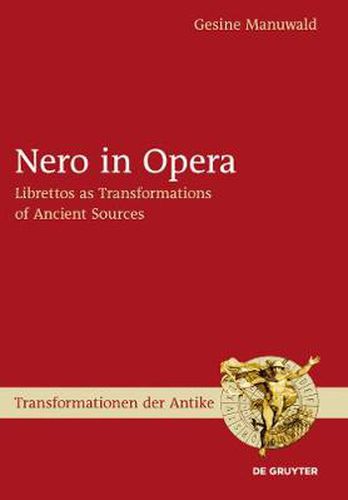
This book considers the story of Nero and Octavia, as told in the pseudo-Senecan Octavia and the works of ancient historiographers, and its reception in (early) modern opera and some related examples of other performative genres. In total the study assembles more than 30 performative texts (including 22 librettos), ranging chronologically from L'incoronazione di Poppea in 1642/43 until the early 20th century, and provides detailed information on all of them. In a close examination of the libretto (and dramatic) texts, the study shows the impact and development of this fascinating story from the beginnings of historical opera onwards. The volume demonstrates the various transformations of the characters of Nero and his wives and of the depiction of their relationship over the centuries, and it looks at the tension between historical elements and genre conventions. The book is therefore of relevance to literary scholars as well as to readers interested in the evolution of Nero’s image in present-day media.
$9.00 standard shipping within Australia
FREE standard shipping within Australia for orders over $100.00
Express & International shipping calculated at checkout
Stock availability can be subject to change without notice. We recommend calling the shop or contacting our online team to check availability of low stock items. Please see our Shopping Online page for more details.
This book considers the story of Nero and Octavia, as told in the pseudo-Senecan Octavia and the works of ancient historiographers, and its reception in (early) modern opera and some related examples of other performative genres. In total the study assembles more than 30 performative texts (including 22 librettos), ranging chronologically from L'incoronazione di Poppea in 1642/43 until the early 20th century, and provides detailed information on all of them. In a close examination of the libretto (and dramatic) texts, the study shows the impact and development of this fascinating story from the beginnings of historical opera onwards. The volume demonstrates the various transformations of the characters of Nero and his wives and of the depiction of their relationship over the centuries, and it looks at the tension between historical elements and genre conventions. The book is therefore of relevance to literary scholars as well as to readers interested in the evolution of Nero’s image in present-day media.
Search our extensive online catalogue.
