Readings Newsletter
Become a Readings Member to make your shopping experience even easier.
Sign in or sign up for free!
You’re not far away from qualifying for FREE standard shipping within Australia
You’ve qualified for FREE standard shipping within Australia
The cart is loading…


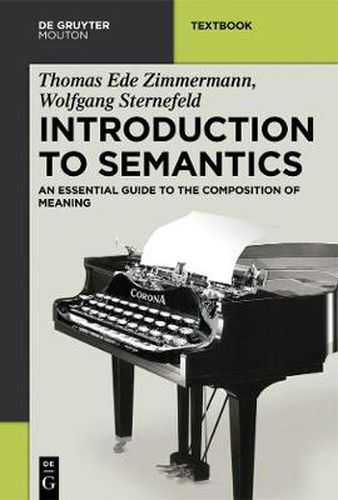
This textbook helps undergraduate students of language and linguistics taking their first steps in one of the core areas of grammar, introducing them to the basic ideas, insights, and techniques of contemporary semantic theory. Requiring no special background knowledge, the book starts with everyday observations about word meaning and useand then hightlights the role of structure in the analysis of the meanings of phrases and clauses, zooming in on the fascinating and vexing question of how speakers manage to meaningfully communicate with sentences and texts they have never come across before. At the same time, the reader becomes acquainted with the modern, functionalist characterization of linguistic meaning in terms of reference (extension) and information (intension), and learns to apply technical tools from formal logic to analyzing the meaning of complex linguistic expressions as being composed by the meanings of their parts. Each of the nine main chapters contains a variety of exercises for self-study and classroom use, with model solutions in the appendix. Extensive English examples provide ample illustration.
$9.00 standard shipping within Australia
FREE standard shipping within Australia for orders over $100.00
Express & International shipping calculated at checkout
Stock availability can be subject to change without notice. We recommend calling the shop or contacting our online team to check availability of low stock items. Please see our Shopping Online page for more details.
This textbook helps undergraduate students of language and linguistics taking their first steps in one of the core areas of grammar, introducing them to the basic ideas, insights, and techniques of contemporary semantic theory. Requiring no special background knowledge, the book starts with everyday observations about word meaning and useand then hightlights the role of structure in the analysis of the meanings of phrases and clauses, zooming in on the fascinating and vexing question of how speakers manage to meaningfully communicate with sentences and texts they have never come across before. At the same time, the reader becomes acquainted with the modern, functionalist characterization of linguistic meaning in terms of reference (extension) and information (intension), and learns to apply technical tools from formal logic to analyzing the meaning of complex linguistic expressions as being composed by the meanings of their parts. Each of the nine main chapters contains a variety of exercises for self-study and classroom use, with model solutions in the appendix. Extensive English examples provide ample illustration.
Search our extensive online catalogue.
