Readings Newsletter
Become a Readings Member to make your shopping experience even easier.
Sign in or sign up for free!
You’re not far away from qualifying for FREE standard shipping within Australia
You’ve qualified for FREE standard shipping within Australia
The cart is loading…


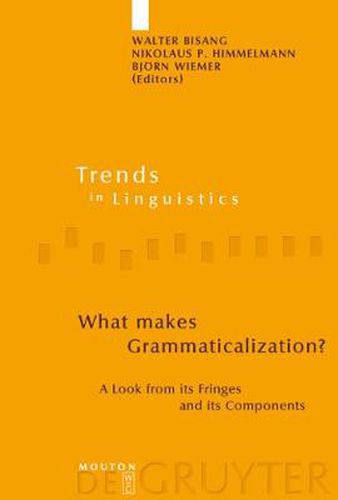
The status of grammaticalization has been the subject of many controversial discussions. The contributions to What makes Grammaticalization? approach the prevalent phenomenon from the angle of language structure and focus on the interrelation between the levels of phonology, pragmatics (inference), discourse and the lexicon and some of them try to integrate the areal perspective. A wealth of data from Slavonic languages as well as from languages of other genetic and areal affiliation is discussed. The book is of interest to linguists specializing in grammaticalization, lexicalization and morphological typology, to language typologists as well as to functional, historical and cognitive linguists.
$9.00 standard shipping within Australia
FREE standard shipping within Australia for orders over $100.00
Express & International shipping calculated at checkout
Stock availability can be subject to change without notice. We recommend calling the shop or contacting our online team to check availability of low stock items. Please see our Shopping Online page for more details.
The status of grammaticalization has been the subject of many controversial discussions. The contributions to What makes Grammaticalization? approach the prevalent phenomenon from the angle of language structure and focus on the interrelation between the levels of phonology, pragmatics (inference), discourse and the lexicon and some of them try to integrate the areal perspective. A wealth of data from Slavonic languages as well as from languages of other genetic and areal affiliation is discussed. The book is of interest to linguists specializing in grammaticalization, lexicalization and morphological typology, to language typologists as well as to functional, historical and cognitive linguists.
Search our extensive online catalogue.
