Readings Newsletter
Become a Readings Member to make your shopping experience even easier.
Sign in or sign up for free!
You’re not far away from qualifying for FREE standard shipping within Australia
You’ve qualified for FREE standard shipping within Australia
The cart is loading…


This title is printed to order. This book may have been self-published. If so, we cannot guarantee the quality of the content. In the main most books will have gone through the editing process however some may not. We therefore suggest that you be aware of this before ordering this book. If in doubt check either the author or publisher’s details as we are unable to accept any returns unless they are faulty. Please contact us if you have any questions.
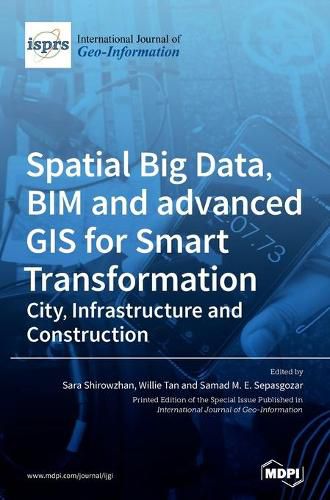
This book covers a range of topics including selective technologies and algorithms that can potentially contribute to developing an intelligent environment and smarter cities. While the connectivity and efficiency of smart cities is important, the analysis of the impact of construction development and large projects in the city is crucial to decision and policy makers, before the project is approved. This book also presents an agenda for future investigations to address the need for advanced tools such as mobile scanners, Geospatial Artificial Intelligence, Unmanned Aerial Vehicles, Geospatial Augmented Reality apps, Light Detection, and Ranging in smart cities. Some of selected specific tools presented in this book are as a simulator for improving the smart parking practices by modelling drivers with activity plans, a bike optimization algorithm to increase the efficiency of bike stations, an agent-based model simulation of human mobility with the use of mobile phone datasets. In addition, this book describes the use of numerical methods to match the network demand and supply of bicycles, investigate the distribution of railways using different indicators, presents a novel algorithm of direction-aware continuous moving K-nearest neighbor queries in road networks, and presents an efficient staged evacuation planning algorithm for multi-exit buildings.
$9.00 standard shipping within Australia
FREE standard shipping within Australia for orders over $100.00
Express & International shipping calculated at checkout
Stock availability can be subject to change without notice. We recommend calling the shop or contacting our online team to check availability of low stock items. Please see our Shopping Online page for more details.
This title is printed to order. This book may have been self-published. If so, we cannot guarantee the quality of the content. In the main most books will have gone through the editing process however some may not. We therefore suggest that you be aware of this before ordering this book. If in doubt check either the author or publisher’s details as we are unable to accept any returns unless they are faulty. Please contact us if you have any questions.
This book covers a range of topics including selective technologies and algorithms that can potentially contribute to developing an intelligent environment and smarter cities. While the connectivity and efficiency of smart cities is important, the analysis of the impact of construction development and large projects in the city is crucial to decision and policy makers, before the project is approved. This book also presents an agenda for future investigations to address the need for advanced tools such as mobile scanners, Geospatial Artificial Intelligence, Unmanned Aerial Vehicles, Geospatial Augmented Reality apps, Light Detection, and Ranging in smart cities. Some of selected specific tools presented in this book are as a simulator for improving the smart parking practices by modelling drivers with activity plans, a bike optimization algorithm to increase the efficiency of bike stations, an agent-based model simulation of human mobility with the use of mobile phone datasets. In addition, this book describes the use of numerical methods to match the network demand and supply of bicycles, investigate the distribution of railways using different indicators, presents a novel algorithm of direction-aware continuous moving K-nearest neighbor queries in road networks, and presents an efficient staged evacuation planning algorithm for multi-exit buildings.
Search our extensive online catalogue.
