Readings Newsletter
Become a Readings Member to make your shopping experience even easier.
Sign in or sign up for free!
You’re not far away from qualifying for FREE standard shipping within Australia
You’ve qualified for FREE standard shipping within Australia
The cart is loading…


This title is printed to order. This book may have been self-published. If so, we cannot guarantee the quality of the content. In the main most books will have gone through the editing process however some may not. We therefore suggest that you be aware of this before ordering this book. If in doubt check either the author or publisher’s details as we are unable to accept any returns unless they are faulty. Please contact us if you have any questions.
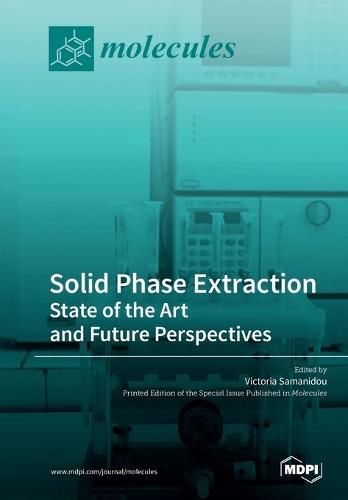
This book is a collection of 13 innovative papers describing the state of the art and the future perspectives in solid-phase extraction covering several analytical fields prior to the use of gas or liquid chromatographic analysis. New sorptive materials are presented including carbon nanohorn suprastructures on paper support, melamine sponge functionalized with urea-formaldehyde co-oligomers, chiral metal-organic frameworks, UiO-66-based metal-organic frameworks, and fabric phase sorptive media for various applications. Solid-phase extraction can be applied in several formats aside from the conventional cartridges or mini-column approach, e.g., online solid-phase extraction, dispersive solid-phase microextraction, and in-syringe micro-solid-phase extraction can be very helpful for analyte pre-concentration and sample clean-up. Polycyclic musks in aqueous samples, 8-Nitroguanine in DNA by chemical derivatization antibacterial diterpenes from the roots of salvia prattii, perfluoroalkyl substances (PFASs) in aater samples by bamboo charcoal-based SPE, parabens in environmental water samples, benzotriazoles as environmental pollutants, organochlorine pesticide residues in various fruit juices and water samples and synthetic peptide purification are among the applications cited in this collection. All these outstanding contributions highlight the necessity of this analytical step, present the advantages and disadvantages of each method and focus on the green analytical chemistry guidelines that have to be fulfilled in current analytical practices.
$9.00 standard shipping within Australia
FREE standard shipping within Australia for orders over $100.00
Express & International shipping calculated at checkout
Stock availability can be subject to change without notice. We recommend calling the shop or contacting our online team to check availability of low stock items. Please see our Shopping Online page for more details.
This title is printed to order. This book may have been self-published. If so, we cannot guarantee the quality of the content. In the main most books will have gone through the editing process however some may not. We therefore suggest that you be aware of this before ordering this book. If in doubt check either the author or publisher’s details as we are unable to accept any returns unless they are faulty. Please contact us if you have any questions.
This book is a collection of 13 innovative papers describing the state of the art and the future perspectives in solid-phase extraction covering several analytical fields prior to the use of gas or liquid chromatographic analysis. New sorptive materials are presented including carbon nanohorn suprastructures on paper support, melamine sponge functionalized with urea-formaldehyde co-oligomers, chiral metal-organic frameworks, UiO-66-based metal-organic frameworks, and fabric phase sorptive media for various applications. Solid-phase extraction can be applied in several formats aside from the conventional cartridges or mini-column approach, e.g., online solid-phase extraction, dispersive solid-phase microextraction, and in-syringe micro-solid-phase extraction can be very helpful for analyte pre-concentration and sample clean-up. Polycyclic musks in aqueous samples, 8-Nitroguanine in DNA by chemical derivatization antibacterial diterpenes from the roots of salvia prattii, perfluoroalkyl substances (PFASs) in aater samples by bamboo charcoal-based SPE, parabens in environmental water samples, benzotriazoles as environmental pollutants, organochlorine pesticide residues in various fruit juices and water samples and synthetic peptide purification are among the applications cited in this collection. All these outstanding contributions highlight the necessity of this analytical step, present the advantages and disadvantages of each method and focus on the green analytical chemistry guidelines that have to be fulfilled in current analytical practices.
Search our extensive online catalogue.
