Readings Newsletter
Become a Readings Member to make your shopping experience even easier.
Sign in or sign up for free!
You’re not far away from qualifying for FREE standard shipping within Australia
You’ve qualified for FREE standard shipping within Australia
The cart is loading…


This title is printed to order. This book may have been self-published. If so, we cannot guarantee the quality of the content. In the main most books will have gone through the editing process however some may not. We therefore suggest that you be aware of this before ordering this book. If in doubt check either the author or publisher’s details as we are unable to accept any returns unless they are faulty. Please contact us if you have any questions.
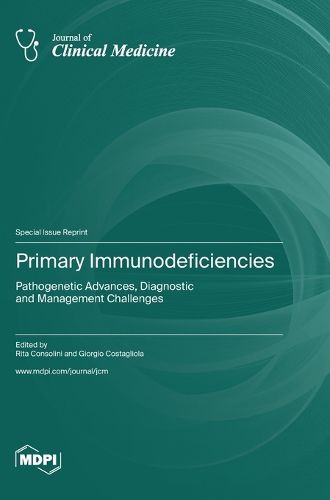
This Special issue focuses of the most relevant advances in the field of inborn errors of immunity. Indeed, as immunology is rapidly progressing, with the constant discovery of new disease entities and the better characterization of molecular mechanisms and targeted therapies, a continuous update is mandatory for clinician and researchers. In this Issue, the non-infectious manifestations of inborn errors of immunity (such as autoimmunity, atopy, and lymphoproliferation) are deeply discussed, as well as the impact of the novel genetic sequencing techniques in the diagnostic approach. Moreover, some well-known disorders, including common variable immunodeficiency, are extensively reviewed and revisited in a modern way. Also, diseases of recent description, including some disorders of immune dysregulation and inborn errors of immunity associated with syndromes, are described. Finally, some of the papers of this Special Issue focus in a detailed way the molecular mechanisms leading to immunodeficiency and immune dysregulation, also opening the way for further clinical and preclinical studies.
As the expanding availability of immunological and genetic testing offers the opportunity to identify new disease entities and elucidate the function of new genes involved in the development and regulation of the immune response, we aim to present the most relevant innovations in this delicate field.
$9.00 standard shipping within Australia
FREE standard shipping within Australia for orders over $100.00
Express & International shipping calculated at checkout
Stock availability can be subject to change without notice. We recommend calling the shop or contacting our online team to check availability of low stock items. Please see our Shopping Online page for more details.
This title is printed to order. This book may have been self-published. If so, we cannot guarantee the quality of the content. In the main most books will have gone through the editing process however some may not. We therefore suggest that you be aware of this before ordering this book. If in doubt check either the author or publisher’s details as we are unable to accept any returns unless they are faulty. Please contact us if you have any questions.
This Special issue focuses of the most relevant advances in the field of inborn errors of immunity. Indeed, as immunology is rapidly progressing, with the constant discovery of new disease entities and the better characterization of molecular mechanisms and targeted therapies, a continuous update is mandatory for clinician and researchers. In this Issue, the non-infectious manifestations of inborn errors of immunity (such as autoimmunity, atopy, and lymphoproliferation) are deeply discussed, as well as the impact of the novel genetic sequencing techniques in the diagnostic approach. Moreover, some well-known disorders, including common variable immunodeficiency, are extensively reviewed and revisited in a modern way. Also, diseases of recent description, including some disorders of immune dysregulation and inborn errors of immunity associated with syndromes, are described. Finally, some of the papers of this Special Issue focus in a detailed way the molecular mechanisms leading to immunodeficiency and immune dysregulation, also opening the way for further clinical and preclinical studies.
As the expanding availability of immunological and genetic testing offers the opportunity to identify new disease entities and elucidate the function of new genes involved in the development and regulation of the immune response, we aim to present the most relevant innovations in this delicate field.
Search our extensive online catalogue.
