Readings Newsletter
Become a Readings Member to make your shopping experience even easier.
Sign in or sign up for free!
You’re not far away from qualifying for FREE standard shipping within Australia
You’ve qualified for FREE standard shipping within Australia
The cart is loading…


This title is printed to order. This book may have been self-published. If so, we cannot guarantee the quality of the content. In the main most books will have gone through the editing process however some may not. We therefore suggest that you be aware of this before ordering this book. If in doubt check either the author or publisher’s details as we are unable to accept any returns unless they are faulty. Please contact us if you have any questions.
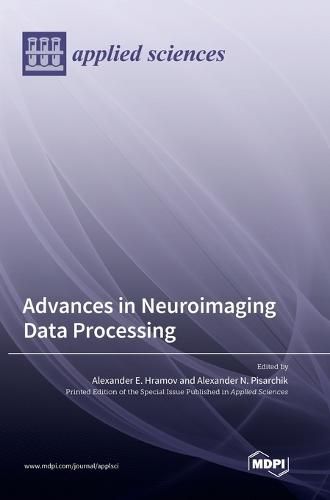
The development of in vivo neuroimaging techniques has yielded an incredible amount of digital information about the brain. Neuroimaging techniques are increasingly being used to study human cognitive processes, create brain-machine interfaces, and also to identify and diagnose certain brain disorders. Currently, neuroscientists and medics actively use different methods for brain scans, including electro- and magnetoencephalography (EEG/MEG), functional near-infrared spectroscopy (fNIRS), electrocorticography (ECoG), functional magnetic resonance imaging (fMRI), positron emission tomography (PET), and diffusion tensor imaging (DTI). Recent advances in signal processing and machine learning for neuroimaging data using various signal processing methods have made impressive progress in solving a number of practical tasks in medicine, healthcare, neuroscience, biomedical engineering, brain-machine interfaces, and cognitive science, to name but a few. This Special Issue aims to provide a forum for academic and industrial communities to present and discuss the latest theoretical and experimental results related to recent advances in neuroimaging data processing in terms of new theories, algorithms, architectures, and applications.
$9.00 standard shipping within Australia
FREE standard shipping within Australia for orders over $100.00
Express & International shipping calculated at checkout
Stock availability can be subject to change without notice. We recommend calling the shop or contacting our online team to check availability of low stock items. Please see our Shopping Online page for more details.
This title is printed to order. This book may have been self-published. If so, we cannot guarantee the quality of the content. In the main most books will have gone through the editing process however some may not. We therefore suggest that you be aware of this before ordering this book. If in doubt check either the author or publisher’s details as we are unable to accept any returns unless they are faulty. Please contact us if you have any questions.
The development of in vivo neuroimaging techniques has yielded an incredible amount of digital information about the brain. Neuroimaging techniques are increasingly being used to study human cognitive processes, create brain-machine interfaces, and also to identify and diagnose certain brain disorders. Currently, neuroscientists and medics actively use different methods for brain scans, including electro- and magnetoencephalography (EEG/MEG), functional near-infrared spectroscopy (fNIRS), electrocorticography (ECoG), functional magnetic resonance imaging (fMRI), positron emission tomography (PET), and diffusion tensor imaging (DTI). Recent advances in signal processing and machine learning for neuroimaging data using various signal processing methods have made impressive progress in solving a number of practical tasks in medicine, healthcare, neuroscience, biomedical engineering, brain-machine interfaces, and cognitive science, to name but a few. This Special Issue aims to provide a forum for academic and industrial communities to present and discuss the latest theoretical and experimental results related to recent advances in neuroimaging data processing in terms of new theories, algorithms, architectures, and applications.
Search our extensive online catalogue.
