Readings Newsletter
Become a Readings Member to make your shopping experience even easier.
Sign in or sign up for free!
You’re not far away from qualifying for FREE standard shipping within Australia
You’ve qualified for FREE standard shipping within Australia
The cart is loading…


This title is printed to order. This book may have been self-published. If so, we cannot guarantee the quality of the content. In the main most books will have gone through the editing process however some may not. We therefore suggest that you be aware of this before ordering this book. If in doubt check either the author or publisher’s details as we are unable to accept any returns unless they are faulty. Please contact us if you have any questions.
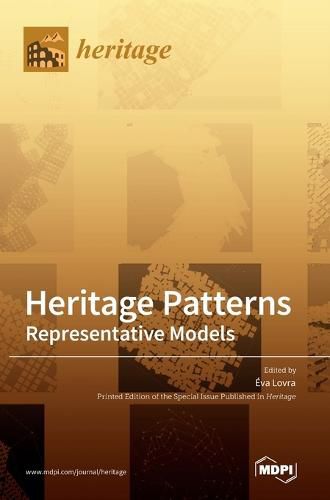
The Heritage Patterns-Representative Models issue of Heritage welcomed twelve articles that discussed traditional and contemporary methodologies, as well as scholars from different backgrounds who intended to seek patterns of tangible heritage and its underlying principles to understand the diversity of heritage approaches. The Special Issue aims to research the patterns in heritage and the underlying rules that define tangible heritage as a universal value in spatial coexistence, economics, urban life, and design via case studies and theoretical proposals that could be implemented in the future. The pattern language and the heritage phenomenon could act as a base of observation to deduct logic and create generative algorithms (generative design); to understand the importance of spatial connection with tangible heritage and urban forms (space syntax, urban morphology, and urban morphometrics) and its visibility; as well as archaeological, architectural, and urban heritage. Based on the UNESCO-ICOMOS doctrines and the examination of morphological regions, urban morphological research and its different layers (urban forms, structural components, built environment, urban tissue, and their interaction) act as a background and foundation for general urban heritage conservation and protection proposals, and also as the base of specific interventions in the built environment caused by natural disasters.
$9.00 standard shipping within Australia
FREE standard shipping within Australia for orders over $100.00
Express & International shipping calculated at checkout
Stock availability can be subject to change without notice. We recommend calling the shop or contacting our online team to check availability of low stock items. Please see our Shopping Online page for more details.
This title is printed to order. This book may have been self-published. If so, we cannot guarantee the quality of the content. In the main most books will have gone through the editing process however some may not. We therefore suggest that you be aware of this before ordering this book. If in doubt check either the author or publisher’s details as we are unable to accept any returns unless they are faulty. Please contact us if you have any questions.
The Heritage Patterns-Representative Models issue of Heritage welcomed twelve articles that discussed traditional and contemporary methodologies, as well as scholars from different backgrounds who intended to seek patterns of tangible heritage and its underlying principles to understand the diversity of heritage approaches. The Special Issue aims to research the patterns in heritage and the underlying rules that define tangible heritage as a universal value in spatial coexistence, economics, urban life, and design via case studies and theoretical proposals that could be implemented in the future. The pattern language and the heritage phenomenon could act as a base of observation to deduct logic and create generative algorithms (generative design); to understand the importance of spatial connection with tangible heritage and urban forms (space syntax, urban morphology, and urban morphometrics) and its visibility; as well as archaeological, architectural, and urban heritage. Based on the UNESCO-ICOMOS doctrines and the examination of morphological regions, urban morphological research and its different layers (urban forms, structural components, built environment, urban tissue, and their interaction) act as a background and foundation for general urban heritage conservation and protection proposals, and also as the base of specific interventions in the built environment caused by natural disasters.
Search our extensive online catalogue.
