Readings Newsletter
Become a Readings Member to make your shopping experience even easier.
Sign in or sign up for free!
You’re not far away from qualifying for FREE standard shipping within Australia
You’ve qualified for FREE standard shipping within Australia
The cart is loading…


This title is printed to order. This book may have been self-published. If so, we cannot guarantee the quality of the content. In the main most books will have gone through the editing process however some may not. We therefore suggest that you be aware of this before ordering this book. If in doubt check either the author or publisher’s details as we are unable to accept any returns unless they are faulty. Please contact us if you have any questions.
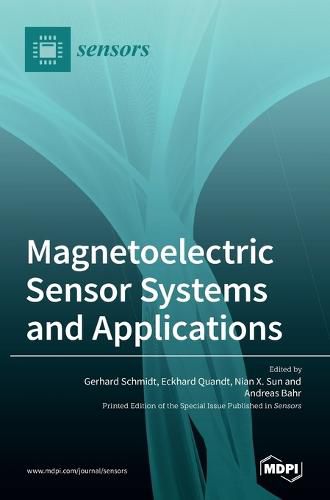
In the field of magnetic sensing, a wide variety of different magnetometer and gradiometer sensor types, as well as the corresponding read-out concepts, are available. Well-established sensor concepts such as Hall sensors and magnetoresistive sensors based on giant magnetoresistances (and many more) have been researched for decades. The development of these types of sensors has reached maturity in many aspects (e.g., performance metrics, reliability, and physical understanding), and these types of sensors are established in a large variety of industrial applications. Magnetic sensors based on the magnetoelectric effect are a relatively new type of magnetic sensor. The potential of magnetoelectric sensors has not yet been fully investigated. Especially in biomedical applications, magnetoelectric sensors show several advantages compared to other concepts for their ability, for example, to operate in magnetically unshielded environments and the absence of required cooling or heating systems. In recent years, research has focused on understanding the different aspects influencing the performance of magnetoelectric sensors. At Kiel University, Germany, the Collaborative Research Center 1261 Magnetoelectric Sensors: From Composite Materials to Biomagnetic Diagnostics , funded by the German Research Foundation, has dedicated its work to establishing a fundamental understanding of magnetoelectric sensors and their performance parameters, pushing the performance of magnetoelectric sensors to the limits and establishing full magnetoelectric sensor systems in biological and clinical practice.
$9.00 standard shipping within Australia
FREE standard shipping within Australia for orders over $100.00
Express & International shipping calculated at checkout
Stock availability can be subject to change without notice. We recommend calling the shop or contacting our online team to check availability of low stock items. Please see our Shopping Online page for more details.
This title is printed to order. This book may have been self-published. If so, we cannot guarantee the quality of the content. In the main most books will have gone through the editing process however some may not. We therefore suggest that you be aware of this before ordering this book. If in doubt check either the author or publisher’s details as we are unable to accept any returns unless they are faulty. Please contact us if you have any questions.
In the field of magnetic sensing, a wide variety of different magnetometer and gradiometer sensor types, as well as the corresponding read-out concepts, are available. Well-established sensor concepts such as Hall sensors and magnetoresistive sensors based on giant magnetoresistances (and many more) have been researched for decades. The development of these types of sensors has reached maturity in many aspects (e.g., performance metrics, reliability, and physical understanding), and these types of sensors are established in a large variety of industrial applications. Magnetic sensors based on the magnetoelectric effect are a relatively new type of magnetic sensor. The potential of magnetoelectric sensors has not yet been fully investigated. Especially in biomedical applications, magnetoelectric sensors show several advantages compared to other concepts for their ability, for example, to operate in magnetically unshielded environments and the absence of required cooling or heating systems. In recent years, research has focused on understanding the different aspects influencing the performance of magnetoelectric sensors. At Kiel University, Germany, the Collaborative Research Center 1261 Magnetoelectric Sensors: From Composite Materials to Biomagnetic Diagnostics , funded by the German Research Foundation, has dedicated its work to establishing a fundamental understanding of magnetoelectric sensors and their performance parameters, pushing the performance of magnetoelectric sensors to the limits and establishing full magnetoelectric sensor systems in biological and clinical practice.
Search our extensive online catalogue.
