Readings Newsletter
Become a Readings Member to make your shopping experience even easier.
Sign in or sign up for free!
You’re not far away from qualifying for FREE standard shipping within Australia
You’ve qualified for FREE standard shipping within Australia
The cart is loading…


This title is printed to order. This book may have been self-published. If so, we cannot guarantee the quality of the content. In the main most books will have gone through the editing process however some may not. We therefore suggest that you be aware of this before ordering this book. If in doubt check either the author or publisher’s details as we are unable to accept any returns unless they are faulty. Please contact us if you have any questions.
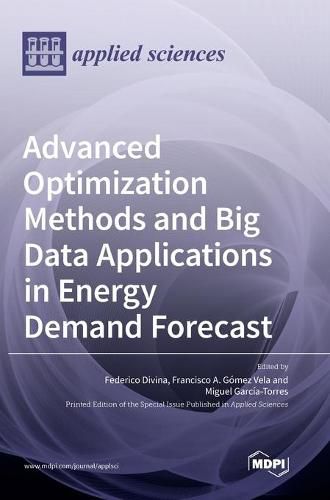
The use of data collectors in energy systems is growing more and more. For example, smart sensors are now widely used in energy production and energy consumption systems.
This implies that huge amounts of data are generated and need to be analyzed in order to extract useful insights from them. Such big data give rise to a number of opportunities and challenges for informed decision making.
In recent years, researchers have been working very actively in order to come up with effective and powerful techniques in order to deal with the huge amount of data available. Such approaches can be used in the context of energy production and consumption considering the amount of data produced by all samples and measurements, as well as including many additional features. With them, automated machine learning methods for extracting relevant patterns, high-performance computing, or data visualization are being successfully applied to energy demand forecasting.
In light of the above, this Special Issue collects the latest research on relevant topics, in particular in energy demand forecasts, and the use of advanced optimization methods and big data techniques. Here, by energy, we mean any kind of energy, e.g., electrical, solar, microwave, or wind
$9.00 standard shipping within Australia
FREE standard shipping within Australia for orders over $100.00
Express & International shipping calculated at checkout
Stock availability can be subject to change without notice. We recommend calling the shop or contacting our online team to check availability of low stock items. Please see our Shopping Online page for more details.
This title is printed to order. This book may have been self-published. If so, we cannot guarantee the quality of the content. In the main most books will have gone through the editing process however some may not. We therefore suggest that you be aware of this before ordering this book. If in doubt check either the author or publisher’s details as we are unable to accept any returns unless they are faulty. Please contact us if you have any questions.
The use of data collectors in energy systems is growing more and more. For example, smart sensors are now widely used in energy production and energy consumption systems.
This implies that huge amounts of data are generated and need to be analyzed in order to extract useful insights from them. Such big data give rise to a number of opportunities and challenges for informed decision making.
In recent years, researchers have been working very actively in order to come up with effective and powerful techniques in order to deal with the huge amount of data available. Such approaches can be used in the context of energy production and consumption considering the amount of data produced by all samples and measurements, as well as including many additional features. With them, automated machine learning methods for extracting relevant patterns, high-performance computing, or data visualization are being successfully applied to energy demand forecasting.
In light of the above, this Special Issue collects the latest research on relevant topics, in particular in energy demand forecasts, and the use of advanced optimization methods and big data techniques. Here, by energy, we mean any kind of energy, e.g., electrical, solar, microwave, or wind
Search our extensive online catalogue.
