Readings Newsletter
Become a Readings Member to make your shopping experience even easier.
Sign in or sign up for free!
You’re not far away from qualifying for FREE standard shipping within Australia
You’ve qualified for FREE standard shipping within Australia
The cart is loading…


This title is printed to order. This book may have been self-published. If so, we cannot guarantee the quality of the content. In the main most books will have gone through the editing process however some may not. We therefore suggest that you be aware of this before ordering this book. If in doubt check either the author or publisher’s details as we are unable to accept any returns unless they are faulty. Please contact us if you have any questions.
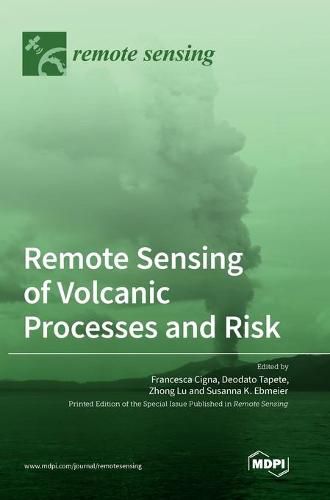
Remote sensing data and methods are increasingly being implemented in assessments of volcanic processes and risk. This happens thanks to their capability to provide a spectrum of observation and measurement opportunities to accurately sense the dynamics, magnitude, frequency, and impacts of volcanic activity. This book includes research papers on the use of satellite, aerial, and ground-based remote sensing to detect thermal features and anomalies, investigate lava and pyroclastic flows, predict the flow path of lahars, measure gas emissions and plumes, and estimate ground deformation. The multi-disciplinary character of the approaches employed for volcano monitoring and the combination of a variety of sensor types, platforms, and methods that come out from the papers testify to the current scientific and technology trends toward multi-data and multi-sensor monitoring solutions. The added value of the papers lies in the demonstration of how remote sensing can improve our knowledge of volcanoes that pose a threat to local communities; back-analysis and critical revision of recent volcanic eruptions and unrest periods; and improvement of modeling and prediction methods. Therefore, the selected case studies also demonstrate the societal impact that this scientific discipline can potentially have on volcanic hazard and risk management.
$9.00 standard shipping within Australia
FREE standard shipping within Australia for orders over $100.00
Express & International shipping calculated at checkout
Stock availability can be subject to change without notice. We recommend calling the shop or contacting our online team to check availability of low stock items. Please see our Shopping Online page for more details.
This title is printed to order. This book may have been self-published. If so, we cannot guarantee the quality of the content. In the main most books will have gone through the editing process however some may not. We therefore suggest that you be aware of this before ordering this book. If in doubt check either the author or publisher’s details as we are unable to accept any returns unless they are faulty. Please contact us if you have any questions.
Remote sensing data and methods are increasingly being implemented in assessments of volcanic processes and risk. This happens thanks to their capability to provide a spectrum of observation and measurement opportunities to accurately sense the dynamics, magnitude, frequency, and impacts of volcanic activity. This book includes research papers on the use of satellite, aerial, and ground-based remote sensing to detect thermal features and anomalies, investigate lava and pyroclastic flows, predict the flow path of lahars, measure gas emissions and plumes, and estimate ground deformation. The multi-disciplinary character of the approaches employed for volcano monitoring and the combination of a variety of sensor types, platforms, and methods that come out from the papers testify to the current scientific and technology trends toward multi-data and multi-sensor monitoring solutions. The added value of the papers lies in the demonstration of how remote sensing can improve our knowledge of volcanoes that pose a threat to local communities; back-analysis and critical revision of recent volcanic eruptions and unrest periods; and improvement of modeling and prediction methods. Therefore, the selected case studies also demonstrate the societal impact that this scientific discipline can potentially have on volcanic hazard and risk management.
Search our extensive online catalogue.
